
Last updated November 23, 2026
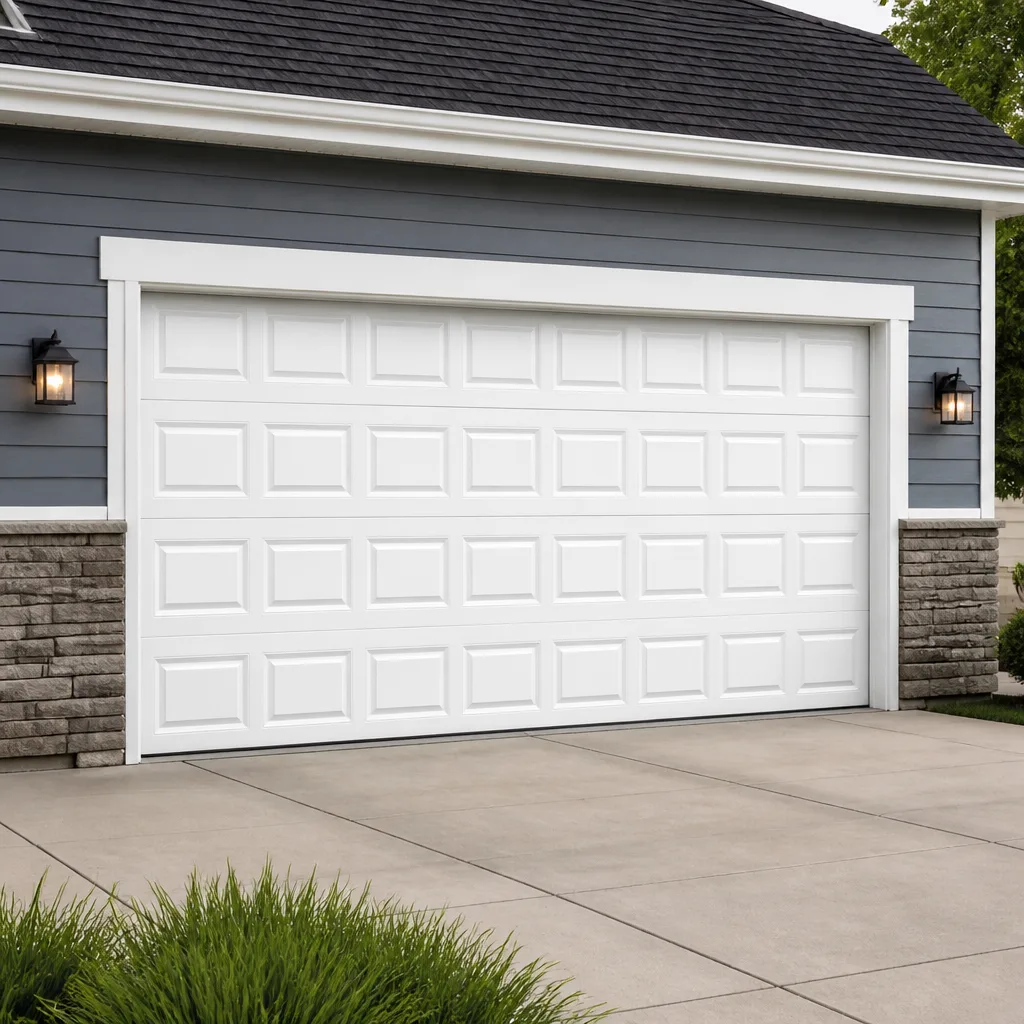 Raised-panel steel
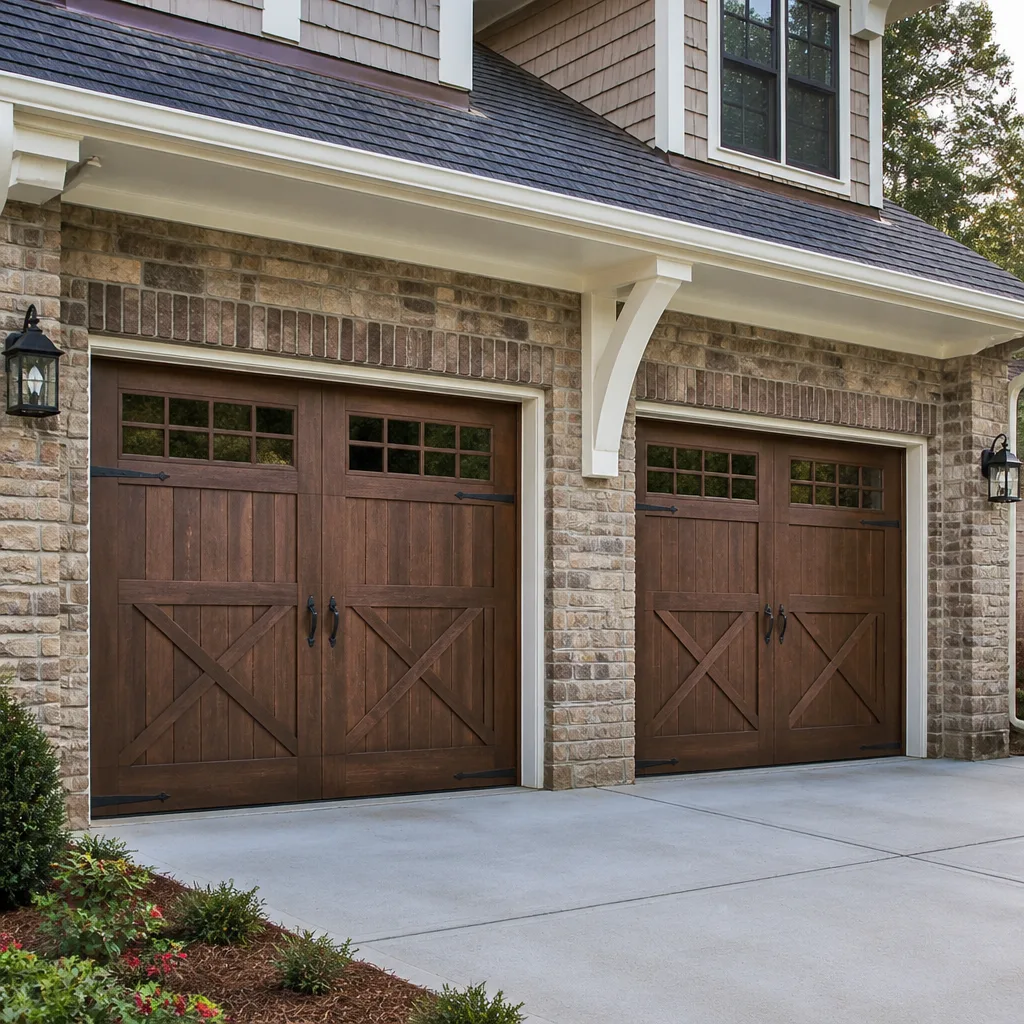 Carriage house
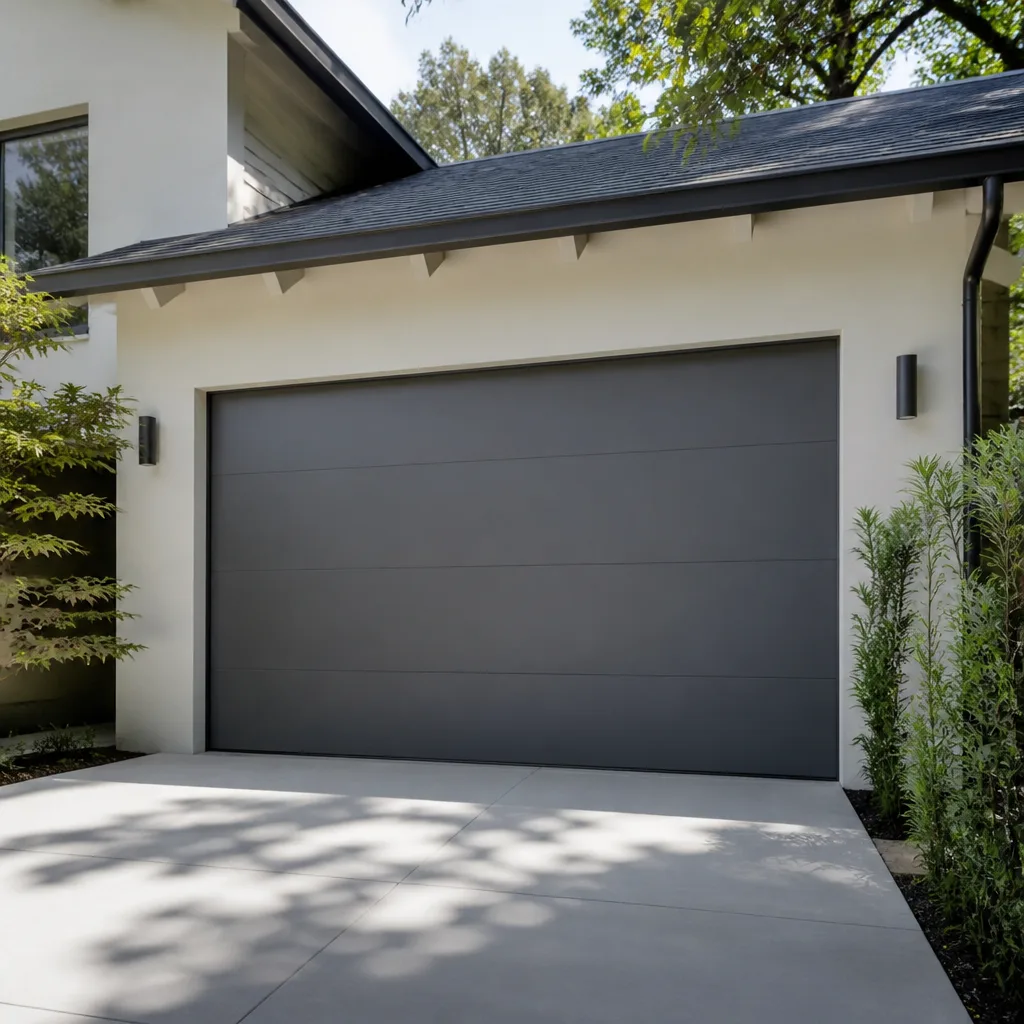 Modern flush
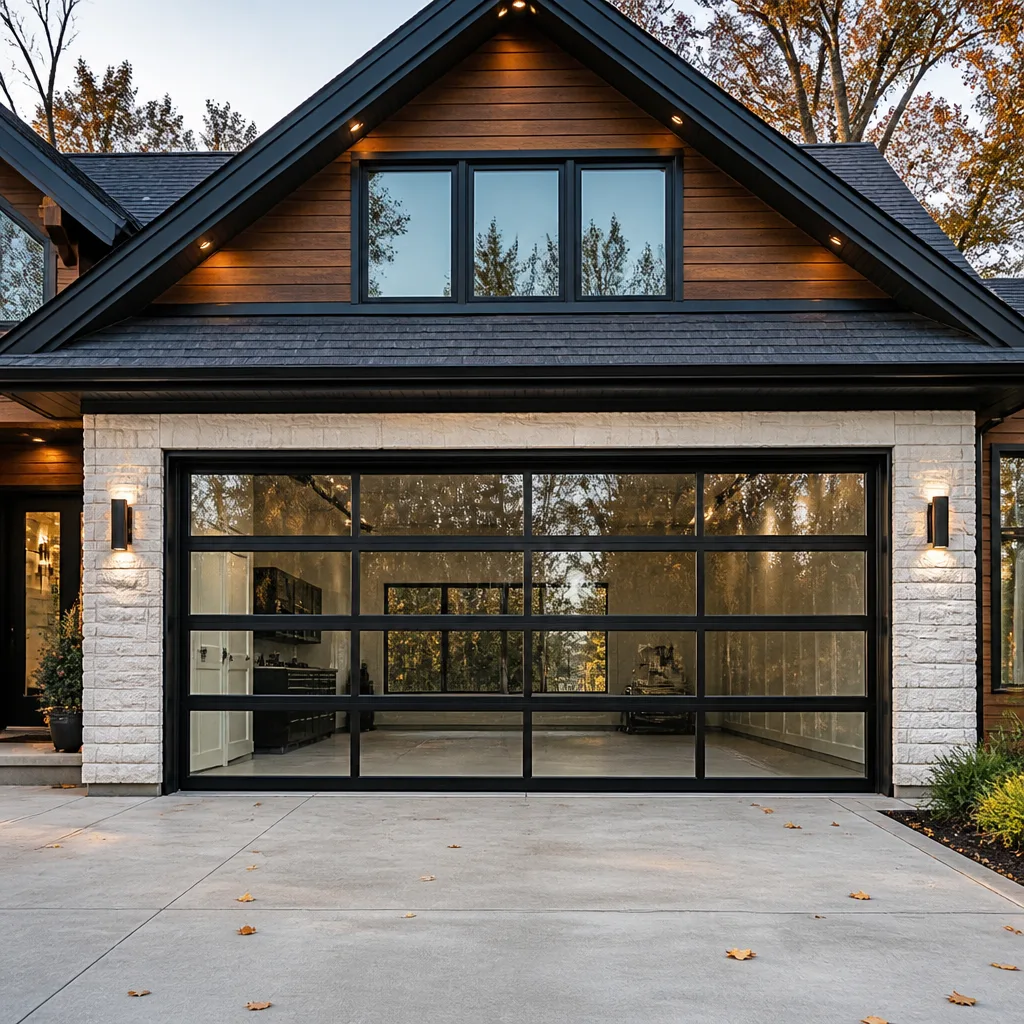 Full-view glass
 LiftMaster openers
 Chamberlain openers
Full 25-point door and opener safety check with every visit - springs, cables, rollers, tracks, and your LiftMaster or Chamberlain opener included
You get a price before we start. It does not change when the pro arrives.
Get your free estimateDIY vs Professional Garage Door: The Largo Homeowner’s Decision Guide
Garage door springs operate under enough tension to cause serious injury, and that isn’t a scare tactic. It’s the reason a technician uses winding bars while a homeowner reaches for a screwdriver. That single difference tells you most of what you need to know about the DIY line. This guide breaks the job down task by task so you can see exactly where a confident homeowner can work safely and where a professional needs to take over. We’ll cover a Largo-specific angle that most online guides skip: how wind-load requirements and permit obligations push the professional line further than you’d expect on a full door replacement.
Quick Answer
For most homeowners in Largo, the safe DIY zone covers lubrication, weatherstripping, sensor alignment, and visual inspection. Anything involving torsion or extension springs, cables, drums, or a full door replacement belongs to a professional. In Largo specifically, a full door replacement typically requires a permit, which makes it a professional job regardless of your skill level. Repair work on a door attached to a house carries real injury risk when springs or cables are involved.
Styles & brands we work with
- Raised-panel steel
- Carriage house
- Modern flush
- Full-view glass
- LiftMaster openers
- Chamberlain openers
Table of Contents
- What a Competent Homeowner Can Safely DIY
- Why Spring and Cable Work Is Non-Negotiable Professional Work
- How Largo Permit Requirements Change the Math on Door Replacement
- The Honest Cost Comparison: When DIY Saves and When It Costs More
- The Middle-Ground Tasks: Weatherstripping, Lubrication, Sensor Alignment
- What Brand-Aware Diagnosis Means for DIY Attempts
- Opener Repair: Where DIY Gets Complicated Fast
- A Preventive Inspection You Can Do This Week
What a Competent Homeowner Can Safely DIY
Some garage door maintenance is genuinely within reach for a careful homeowner with basic tools. We’ve seen plenty of homeowners handle these jobs correctly, and doing them on a regular schedule prevents bigger problems later. Here’s the safe zone:
- Lubrication. Hinges, rollers, and the torsion tube benefit from a garage-door-specific lubricant. Avoid heavy grease that attracts grit.
- Weatherstripping replacement. Bottom seals and side seals wear out and let in heat, humidity, and pests. These pull off and press on without touching the spring system.
- Safety sensor alignment. The two small sensors at the bottom of the door’s track need to see each other. A misaligned or dirty lens is the most common cause of a door that won’t close.
- Visual inspection. Looking at cables for fraying, springs for gaps, and hinges for wear is safe and takes five minutes.
- Tightening loose bracket bolts. Snug is enough; over-torquing can strip the hardware.
- Panel washing and paint touch-up on steel doors, which keeps the surface from rusting in Largo’s humid summers.
- Battery replacement in a LiftMaster or Chamberlain remote, and re-pairing a remote to the opener.
Notice what’s missing from that list: nothing that requires the door’s tension system to be released. That’s the dividing line. The moment a repair involves the springs, the cables, the drums, or the bottom bracket, you’ve left the safe zone. This is also where a lot of well-intentioned weekend projects turn into a callback to garage door repair the following week.
Why Spring and Cable Work Is Non-Negotiable Professional Work
The danger isn’t just that springs are under tension. It’s the amount of stored energy they hold and the way that energy releases when the tension lets go. A torsion spring on a standard residential door can be holding the weight of the whole door through a steel cable wound on a metal drum. Extension springs, common on older doors, hold that same energy along a stretched coil. When either fails during a repair attempt, the release is instant and violent.
Winding bars exist for a reason. They’re solid steel rods machined to fit the winding cone so the technician has real leverage and control while adding or removing turns. A screwdriver, a piece of rebar, or a wrench used as a substitute will bend, slip, or snap an end. A technician also knows how many turns the spring needs from the door’s size, weight, and track dimensions. Guessing leaves the door either unsafe or out of balance.
Cable work carries its own risk. Cables run at tension under the spring load, and when one snaps or slips during a repair, it can whip with enough force to cut. We treat every cable failure as a professional job because there’s no safe middle ground.
If you hear a sharp bang from the garage and the door won’t lift, that’s typically a broken spring. Don’t force the door. Call (855) 774-7112. We answer 24/7. Fast dispatch from 7am to 7pm, Sunday through Friday. Spring work is a dedicated service for us, and it’s exactly the kind of job where a fast, correct repair protects everything else on the door.
How Largo Permit Requirements Change the Math on Door Replacement
Here’s the part of the DIY conversation most online guides never touch. In Florida, garage door replacement can involve permit requirements tied to wind-load and product-approval rules, and Largo follows local building department procedures. We don’t quote specific code sections, and we won’t pretend to: the right move is to call the City of Largo’s building department and ask what your replacement requires. What we can tell you is that in our experience across Largo, a full door replacement is almost always a permitted job, and permits mean the work has to be done to a documented standard.
What that means for a DIY-minded homeowner:
- The permit pulls the job into professional territory. You can file for a permit yourself as a homeowner in some jurisdictions, but the inspection and the wind-load documentation are the hard part.
- The door and the hardware must match the opening’s design pressure rating. That’s not a guess-and-check exercise. Manufacturers like Clopay publish the specs, and a licensed professional installs to those specs.
- The result has to pass inspection the first time. A door that fails an inspection means another trip, another fee, and a longer hole in your garage wall.
- Insurance may ask for proof of a compliant install. If you’re ever in that conversation, having a licensed professional’s paperwork on hand is worth far more than the money you saved.
We’re not saying every repair needs a permit. Spring replacement, opener repair, and routine maintenance usually don’t. But a full door replacement in Largo, especially on a home in Belleair Bluffs, Seminole, or Clearwater that’s part of an HOA, is a project to route through a professional from the start.
The Honest Cost Comparison: When DIY Saves and When It Costs More
DIY saves real money on the jobs we listed in the safe zone. A $15 tube of garage door lubricant and an afternoon of weatherstripping replacement beats a service call every time. DIY can also cost you far more than a professional repair when you attempt a spring or cable job and the door ends up worse than when you started. That’s the honest split: cheap wins on maintenance, expensive mistakes on mechanical work.
Here’s how the costs usually compare for the tasks that matter most in Largo:
- Lubrication and sensor alignment: DIY cost is a few dollars in supplies. This is genuinely the homeowner’s territory.
- Weatherstripping replacement: A bottom seal kit runs $20 to $40 at most hardware stores for standard door widths. A professional install adds labor on top, and it’s a reasonable upgrade if the door is tall or the seal is a specialty type.
- Spring replacement (one spring): A professional job typically runs $180 to $340 for a single spring, and a matched pair usually needs replacing together, which roughly doubles it. Doing it yourself saves the labor, but the risk of a serious injury or a bent door is the trade.
- Cable replacement: Pricing varies with door type and cable run, so we estimate per job. Cables are professional work because of the tension risk.
- Opener repair and replacement: Opener pricing depends on the unit and the drive system. A basic belt-drive replacement runs less than a smart-home LiftMaster or Chamberlain system with battery backup, and installation adds labor.
- Full door replacement: This is the job where DIY rarely saves anything when permits and inspections are factored in. The written estimate sets the price, and there are no surprises if the door and hardware are measured correctly at the start.
The pattern is straightforward. Spend your DIY time on the low-risk, high-frequency tasks, and let a professional handle anything that touches the tension system or the door’s structure. A single spring job that goes sideways can wipe out a full season of DIY savings.
The Middle-Ground Tasks: Weatherstripping, Lubrication, Sensor Alignment
These three tasks belong in a category of their own because they’re safe, they pay off, and they don’t require special training. Here’s what each one involves when done properly.
Weatherstripping
The bottom seal at the foot of the door compresses every time the door closes. Over time, in Largo’s humidity and heat, the rubber dries out, cracks, or tears away. Replacement means opening the door partway, pulling the old seal out of its channel, and pressing a new one in. Side and top seals are similar. The main skill involved is measuring the door’s width correctly and choosing a seal rated for the door’s track profile.
Lubrication
A garage door has more moving parts than most homeowners realize: hinges, rollers, the torsion tube, the track. A garage-door-specific lubricant applied lightly to hinges and roller stems keeps parts moving smoothly and quiet. Avoid greasing the track itself, which attracts grit that wears the rollers. This is a twice-a-year job, and it’s the single best thing you can do to extend the door’s life.
Safety Sensor Alignment
Every modern opener has a safety reverse system. The two small sensor eyes sit at the bottom of each track and beam an infrared signal to each other. When the door won’t close and the light is blinking, a misaligned or dirty sensor is the first thing to check. Clean the lens with a dry cloth. If the sensor bracket is loose, hand-tighten it and re-aim. If the sensor is dead after a power surge, that’s garage door opener repair territory, and we handle it for LiftMaster, Chamberlain, Genie, and Craftsman systems.
What Brand-Aware Diagnosis Means for DIY Attempts
One reason DIY attempts fail isn’t skill, it’s brand-specific differences. We work on the brand you already have, and that matters when a Chamberlain opener and a Genie opener need different troubleshooting steps. A Clopay panel door uses different hardware than many Wayne Dalton models. Raynor and Amarr doors have their own track profiles and hinge patterns. A homeowner working from a generic YouTube video may be looking at the wrong diagram entirely.
Our technicians have up to 13 years of experience across those brands, which means we diagnose the actual system in front of us. When you call, have the door’s branding and model number handy if you can find it, usually on a sticker inside the door panel or on the opener’s housing.
Opener Repair: Where DIY Gets Complicated Fast
Opener repair sits in a middle zone between the safe DIY tasks and the strictly professional ones. A remote that won’t pair, a battery that needs changing, or a light that’s burned out are homeowner-friendly. Retrofitting a smart-home module or replacing the opener itself is a different level of work.
Here’s the split we see in Largo:
- Remote pairing and battery swaps: Safe to DIY. The manual for your LiftMaster or Chamberlain unit will walk you through it.
- Travel limit adjustment: Adjustable by a careful homeowner. The door must fully close against the floor without straining the opener.
- Force adjustment: Tread carefully. The safety reverse system is set here, and a door that closes on a child or pet because the force is too high is a real hazard.
- Opener replacement: A professional job. Wiring the new unit into the ceiling junction box and matching the drive system to the door’s weight is not a plug-and-play process, and getting the spring balance right matters more than the opener itself.
- Belt-drive versus chain-drive swaps: Professional. The two systems mount differently and have different noise profiles. Matching the drive to the door prevents premature wear.
If the door is unbalanced or a spring has failed, replacing the opener won’t fix it. The opener is the muscle on top; the springs carry the weight. Get the balance sorted first, then look at the opener.
A Preventive Inspection You Can Do This Week
This is the routine we recommend to any homeowner who wants to stay ahead of failures rather than reacting to them. It takes fifteen minutes, and it’s safe to do from the ground with the door closed.
- Look at the springs. Torsion springs run along the shaft above the door. Extension springs run alongside the tracks. Check for visible gaps, kinks, or a spring that looks extended beyond its original length.
- Run your eyes along the cables. Look for fraying, broken strands, or a cable that’s come off its drum. Don’t touch the cables. Just look.
- Listen to the door. A grinding, rattling, or scraping sound during opening signals something worn or loose.
- Balance check. With the door halfway open, pull the release cord to disengage the opener. The door should hold its position. A door that drifts down on its own is out of balance and will wear out the opener.
- Safety reverse test. Place a block of wood under the door and close it. The door should reverse on contact. If it doesn’t, the opener’s safety system needs attention.
- Check the bottom seal and side seals for tears or gaps.
- Wipe down the sensors and check that both LED lights are on and steady.
If any of these checks turn up spring or cable issues, don’t attempt a repair. Call (855) 774-7112. Same-day service is often available for urgent repairs, and estimates are free. If you’d like a longer maintenance conversation, we’re glad to schedule that as a separate visit and talk through what to watch for.
Common Mistakes to Avoid
- Using a screwdriver to adjust a torsion spring. A screwdriver will slip or bend under the load, and the resulting release can cause serious injury. Winding bars exist for a reason, and only trained technicians should use them.
- Replacing one matched spring instead of the pair. When two springs are wound together and one breaks, the other is already at the end of its life. Replacing one only leaves a mismatched pair that fails early.
- Forcing a door that won’t lift. If a spring has broken, forcing the door strains the opener, the cables, and the panels. Call a professional instead.
- Overtightening hinges and brackets. Snug is the goal. Over-torquing strips threads or cracks the bracket, which causes more trouble than the original wobble.
- Applying grease to the track. It attracts grit in Largo’s humid air, which wears the rollers faster than dry track would.
- Skipping the permit on a full door replacement. A permit protects your investment and your insurance position. A door install that skips it can create headaches later.
- Confusing the opener with the door’s problem. If the door is unbalanced or a spring has failed, replacing the opener won’t fix the underlying issue and can wear out the new unit faster. Please check with a professional before spending money on an opener when a balance or spring issue might be the real culprit.
- Ignoring a cable that’s come off a drum. A cable off its drum can be a warning sign that the door’s tension is compromised. Don’t try to rewind it yourself.
See the difference
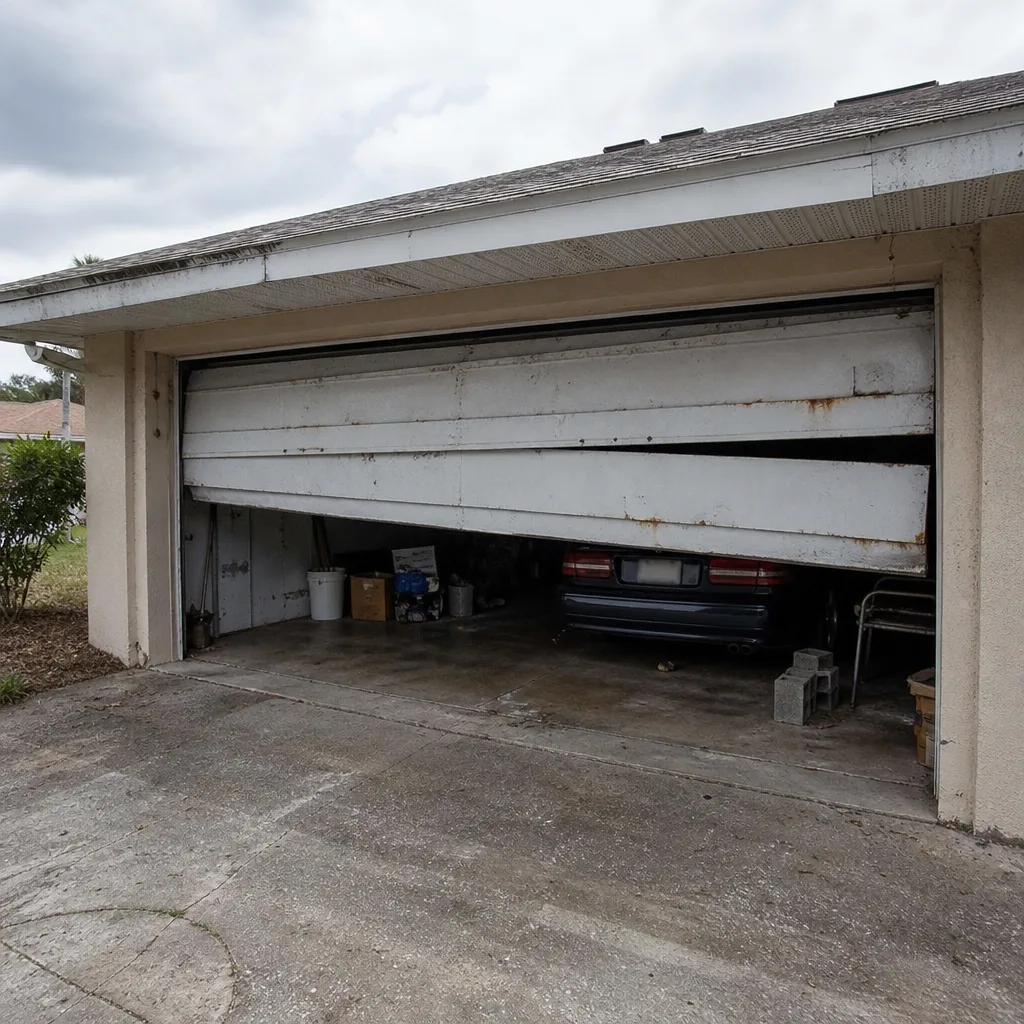 Before
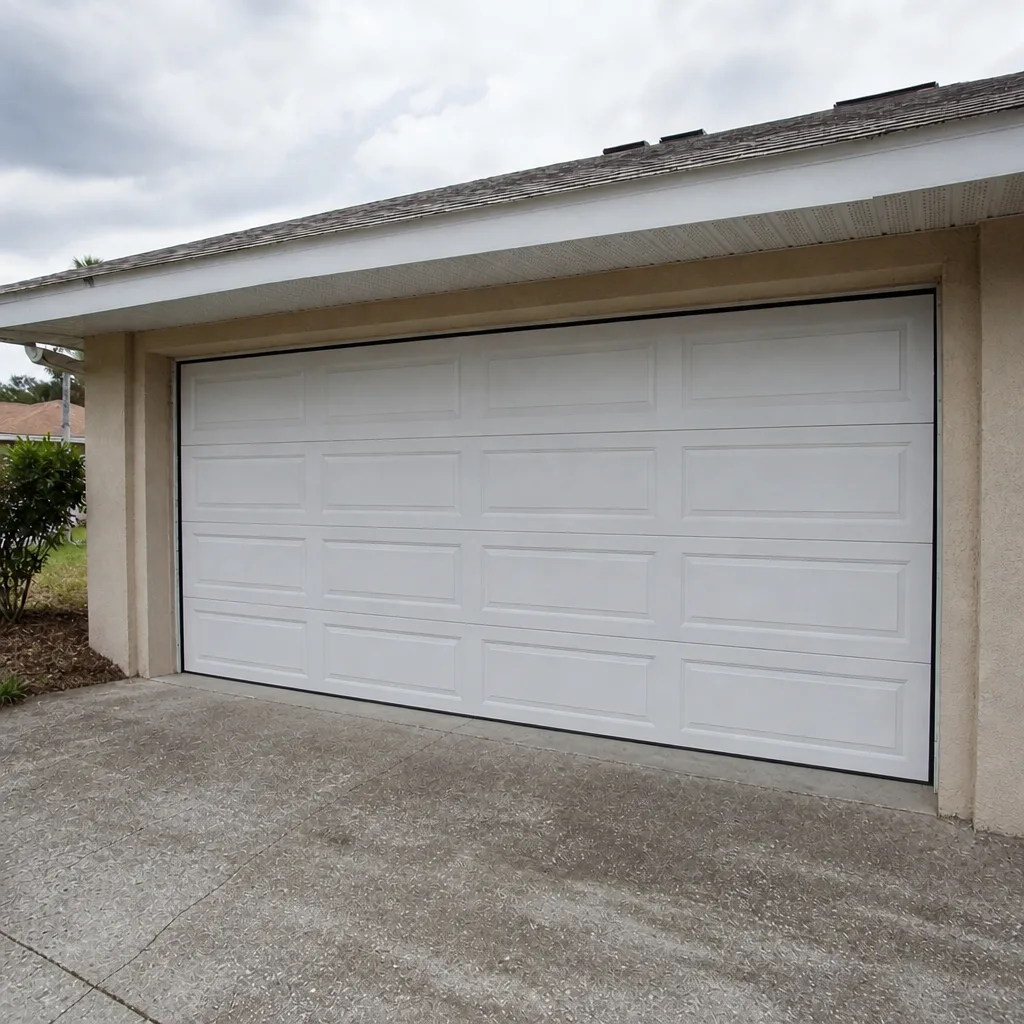 After
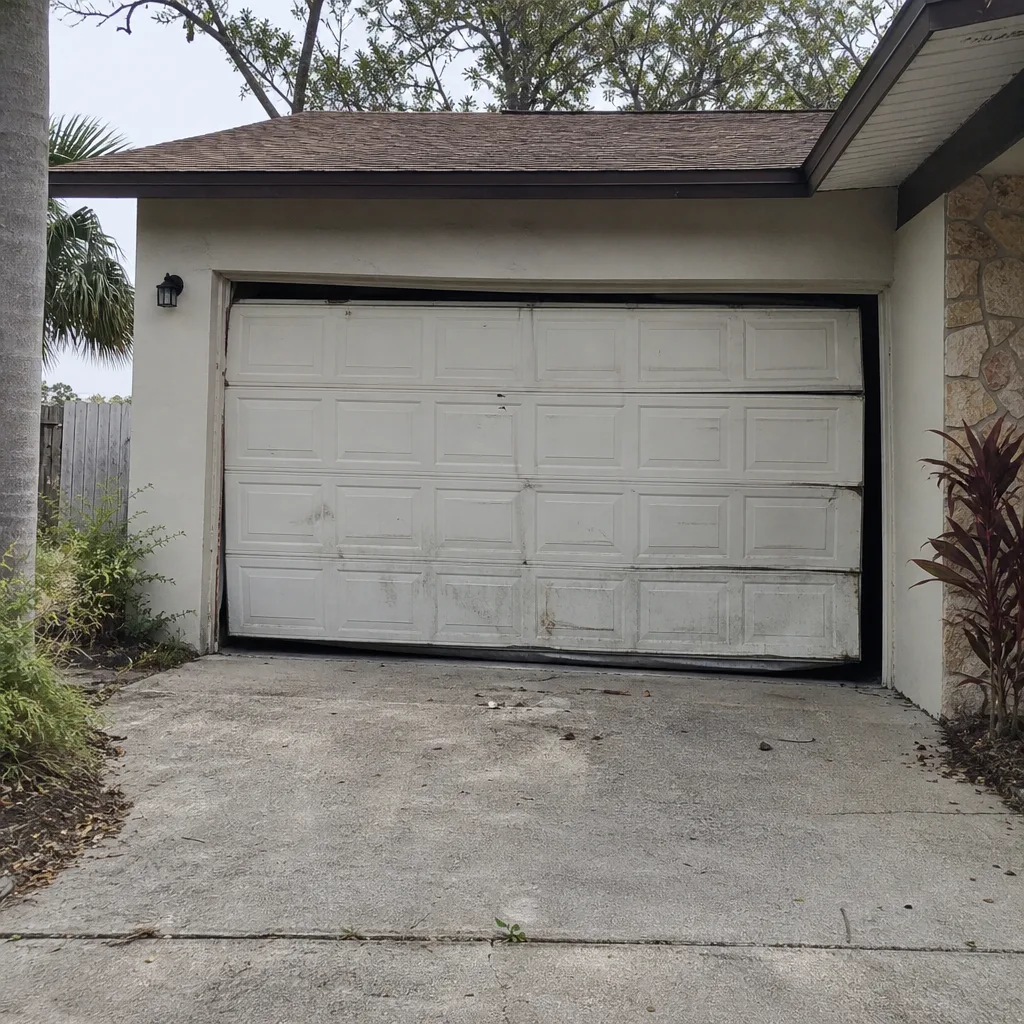 Before
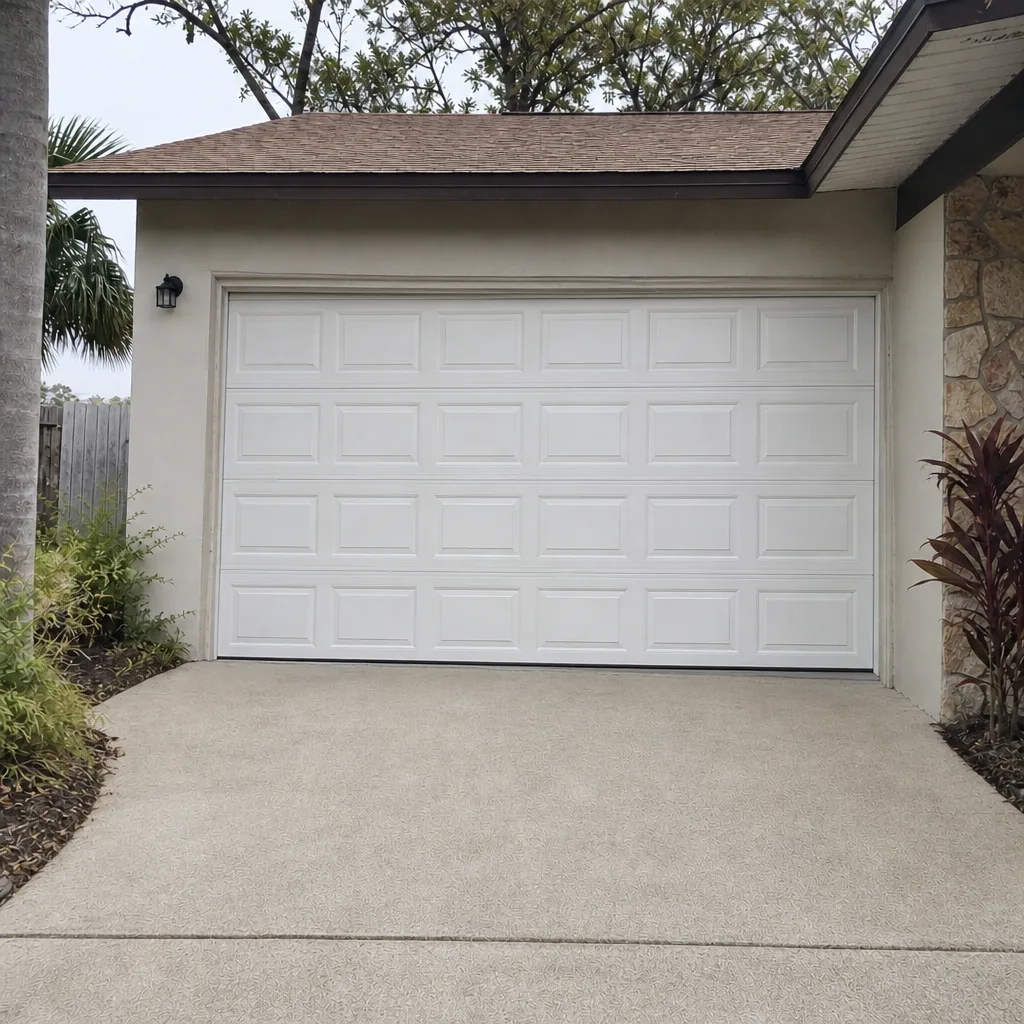 After
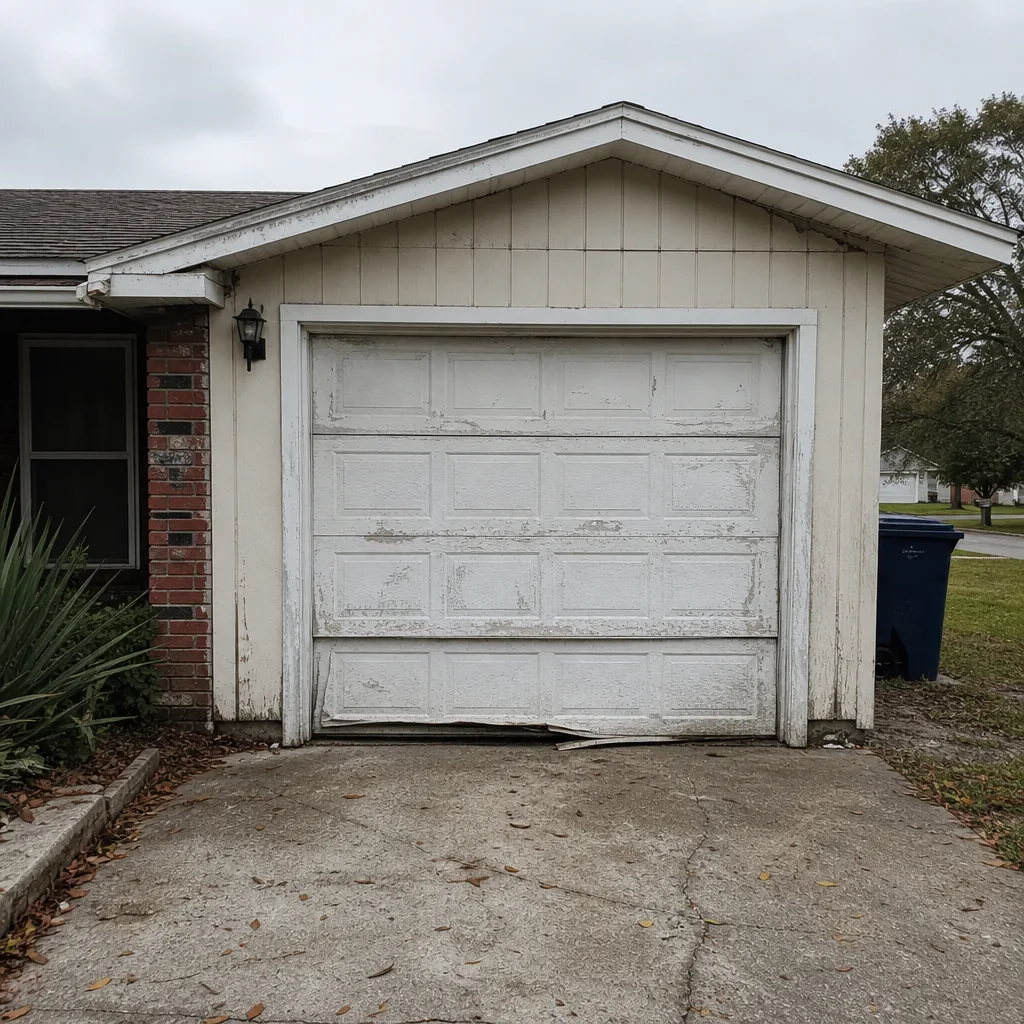 Before
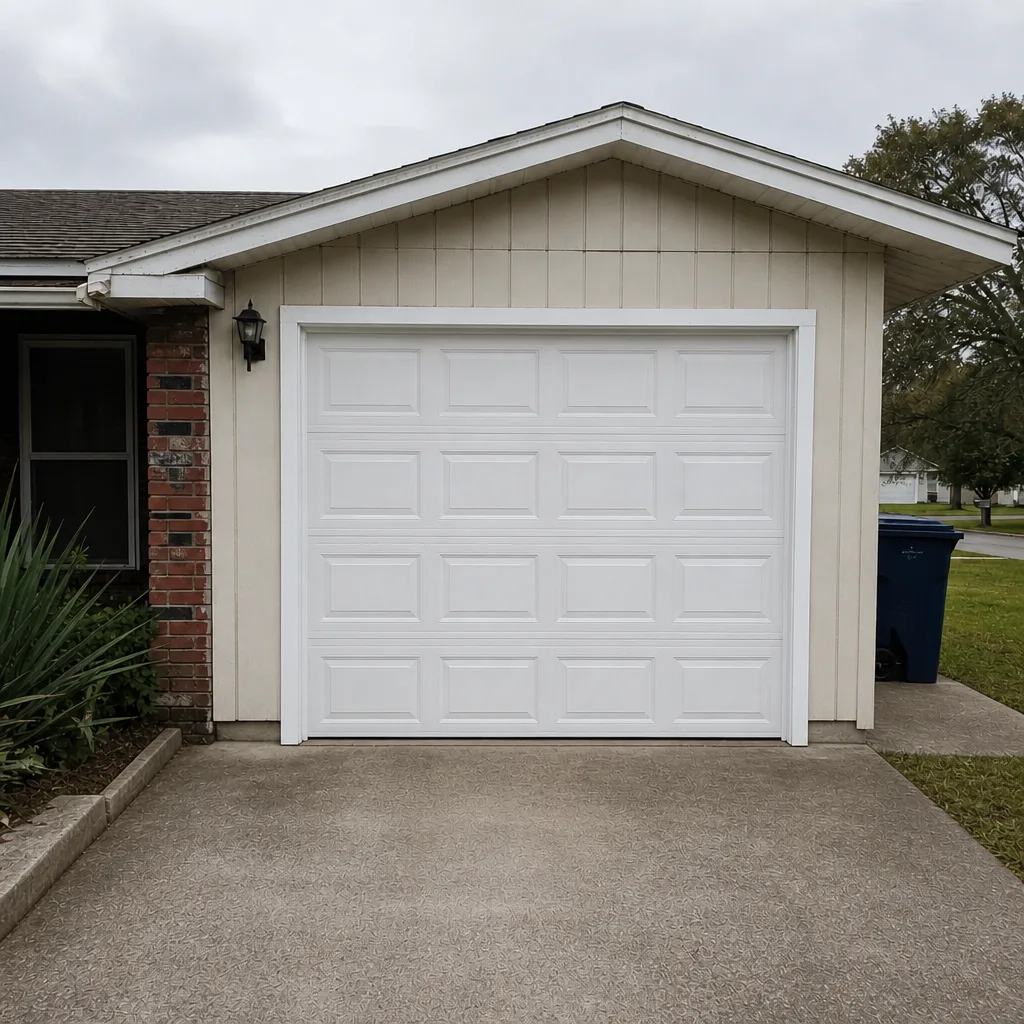 After
When to Call a Professional
Call a professional the moment a repair touches the spring or cable system, the bottom bracket, or the door’s overall structure. Call for an unbalanced door, a door that reverses partway through a cycle, a door that won’t stay closed, or a door that’s off its track. In Largo, a full door replacement is a professional job for permit reasons alone. So is replacing a broken torsion spring, a snapped cable, or a drum that’s failed. Those four items are the entire list of common garage door repairs where we advise homeowners not to attempt the work.
For routine maintenance, garage door spring repair inspections, or anything that just doesn’t seem right, Largo Garage Door Repair Pros offers free estimates in Largo. Call (855) 774-7112. Estimates are free, and the price is quoted and agreed before any work starts. Our technicians have up to 13 years of experience and work across the eight brands most common in residential use: LiftMaster, Chamberlain, Genie, Clopay, Amarr, Wayne Dalton, Craftsman, and Raynor. Emergency service is genuinely available for urgent failures that can’t wait.
Frequently Asked Questions
No. Torsion and extension springs are under enough tension to cause serious injury when they fail during the repair, and winding bars require training to use safely. A broken spring is a professional job. Call (855) 774-7112 for an exact quote. Estimates are free.
In most cases, yes, and the safest path is to call the City of Largo’s building department to confirm what your specific replacement requires. Wind-load and product-approval rules in Florida mean a full door replacement is treated as a permitted project. That structure is one reason a full replacement belongs to a licensed professional.
Lubrication, weatherstripping replacement, safety sensor alignment, visual inspections, and remote battery changes are all safe DIY tasks. Anything that releases the door’s tension system, including spring, cable, and drum work, should go to a professional.
For a spring or repair call, the price quoted before work starts is the price for that work. If we find additional issues during the repair, we tell you about them before proceeding and let you decide. The written estimate sets the final price.
Same-day service is often available for urgent repair calls. We answer 24/7. Fast dispatch from 7am to 7pm, Sunday through Friday. A call outside dispatch hours is booked into the next opening. Call (855) 774-7112 for the soonest availability.
We connect you with local professionals who are licensed and insured as their state requires. The technician working on your Largo door is a vetted independent professional, and we ask that any installation follow local permit requirements. If you have insurance documentation needs, tell us when you call.
A typical spring replacement runs $180 to $340 for one spring, and if the door has a matched pair, both usually need replacing together, which roughly doubles the price. The written estimate sets the final price, and estimates are free. Call (855) 774-7112 for an exact quote.
Replacing an opener yourself is possible but not recommended. Wiring the unit correctly, matching the drive system to the door’s weight, and getting the safety reverse system set to spec all matter more than they look. If the door is unbalanced or the springs are worn, a new opener will wear out quickly. That’s garage door opener repair and replacement territory for a professional.
The Bottom Line
The DIY versus professional question comes down to what’s actually involved in each task. Lubrication, weatherstripping, sensor alignment, and visual inspection are real homeowner territory, and doing them regularly will save you money. Springs, cables, drums, and full door replacements aren’t about skill level. They carry injury risk or permit obligations that make the professional line the right one, and in Largo, the permit issue alone shifts a full replacement into professional hands. If you’re unsure which side of the line a task falls on, ask. A five-minute call is cheaper than a bent door or a surprise invoice.
If you’re in Largo and you need a repair, a spring replacement, an opener serviced, or a new door installed, Largo Garage Door Repair Pros is set up to handle the whole lifecycle. We’re fluent in the eight major brands, we take emergency calls seriously, and we quote before we start.
Call (855) 774-7112 for a free estimate. We answer 24/7. Fast dispatch from 7am to 7pm, Sunday through Friday. If you’re not sure whether your door needs a repair or a replacement, give us a call and we’ll tell you straight.
Written by the team at Largo Garage Door Repair Pros.