
Last updated November 23, 2026
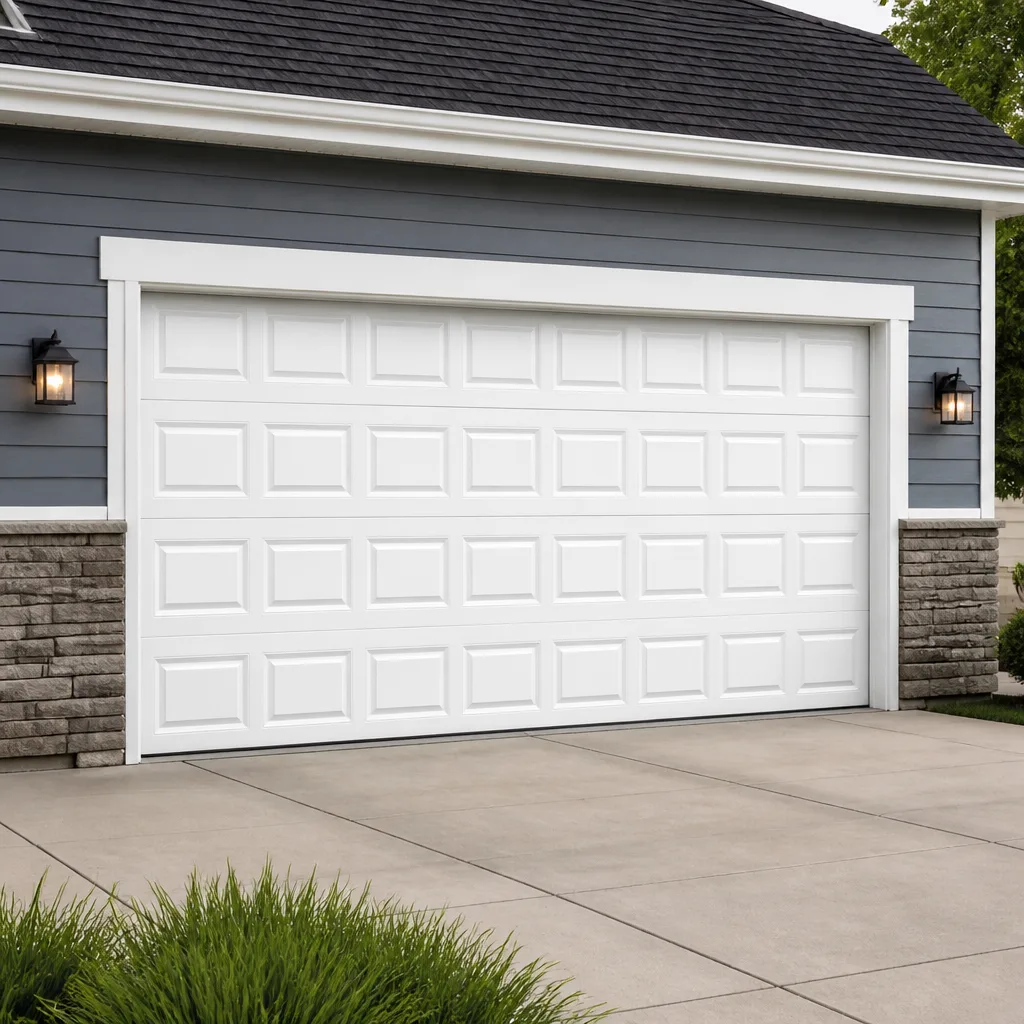 Raised-panel steel
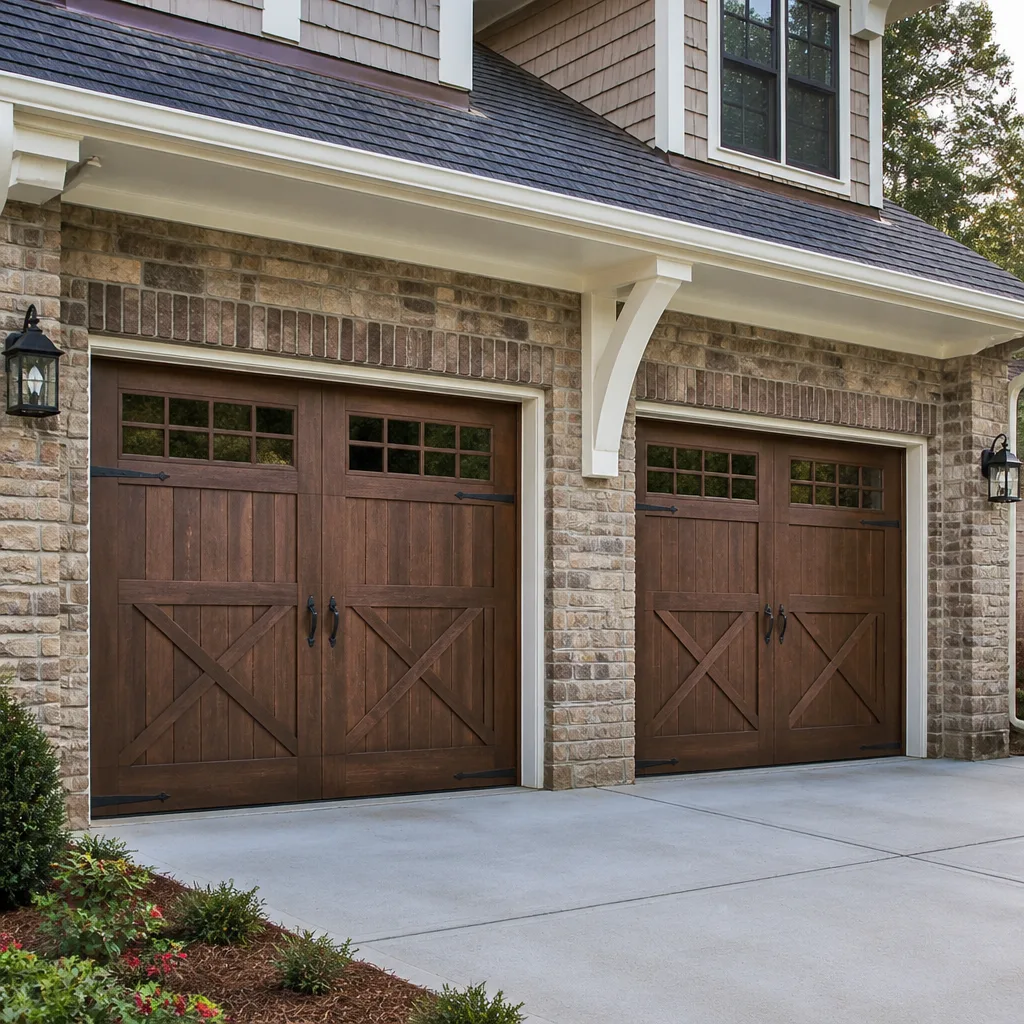 Carriage house
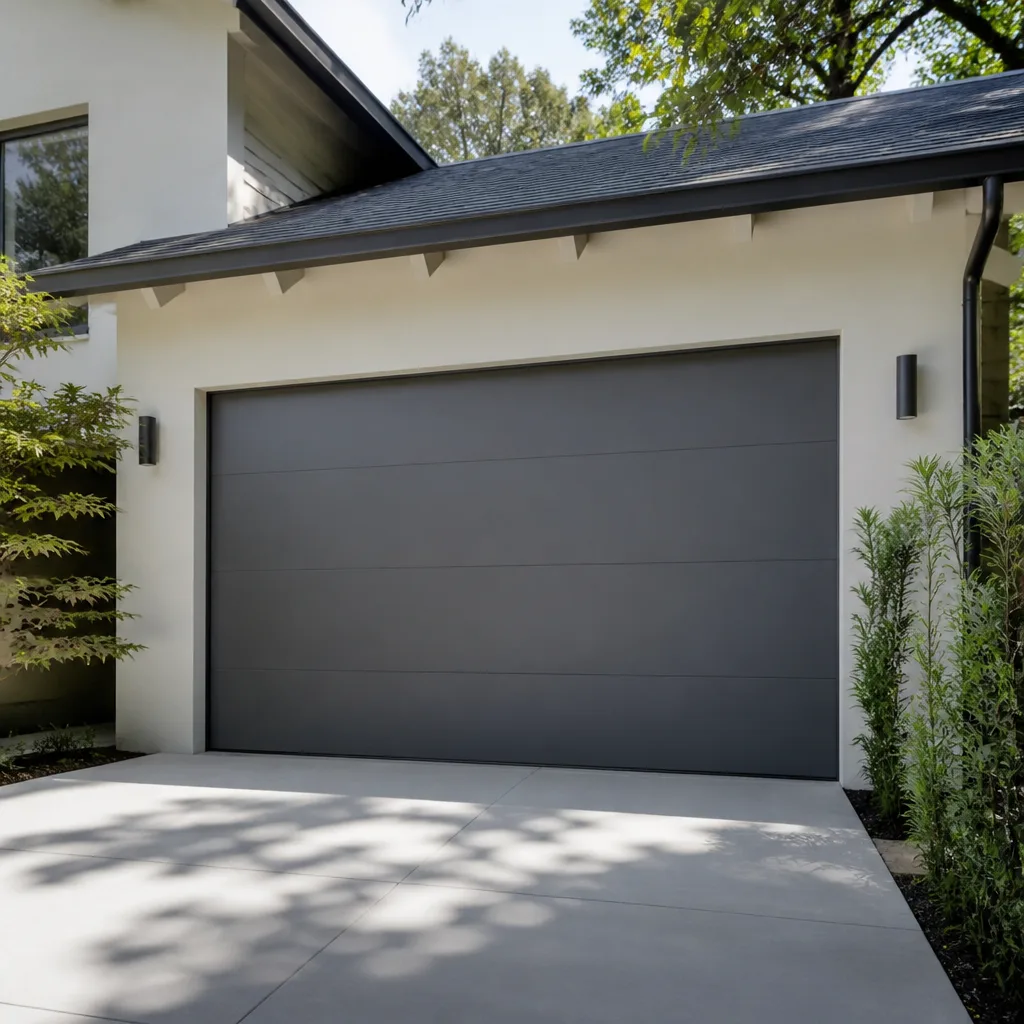 Modern flush
 Full-view glass
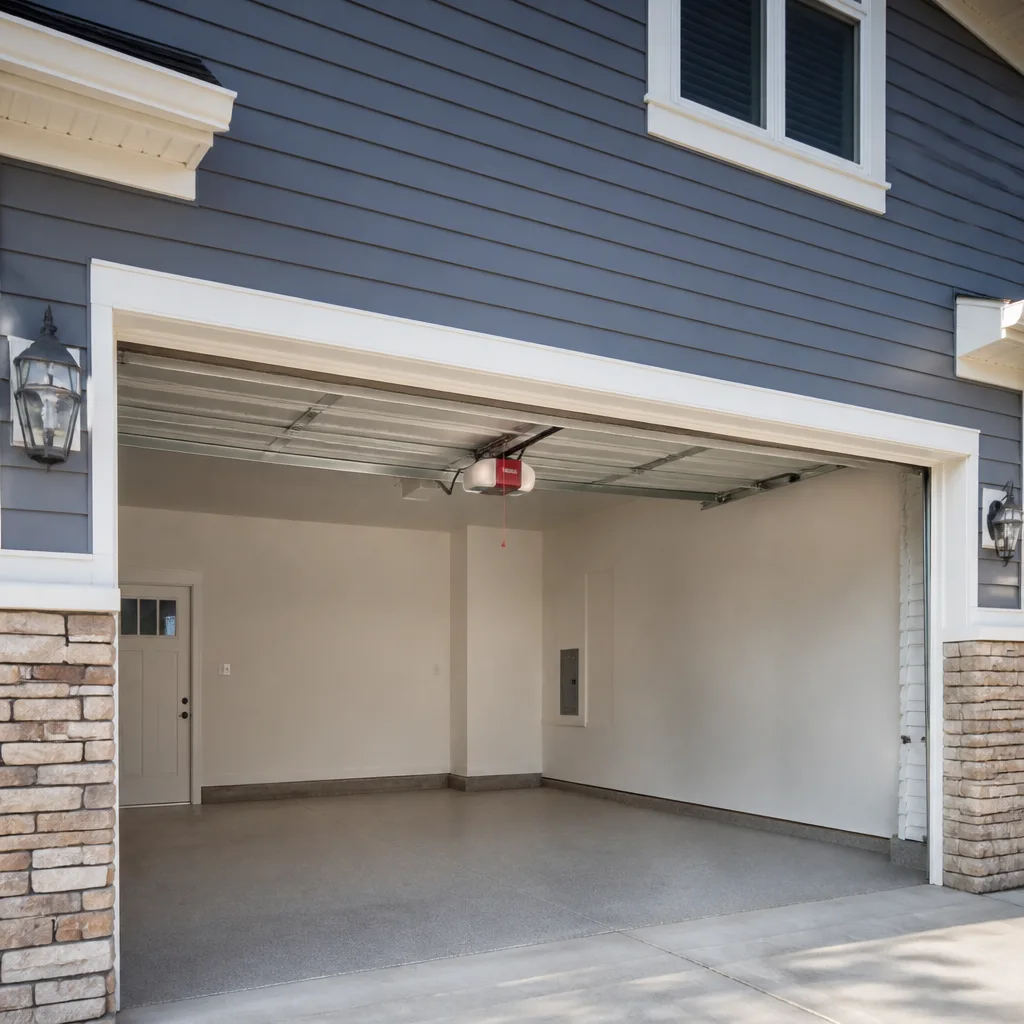 LiftMaster openers
 Chamberlain openers
Full 25-point door and opener safety check with every visit - springs, cables, rollers, tracks, and your LiftMaster or Chamberlain opener included
You get a price before we start. It does not change when the pro arrives.
Get your free estimateGarage Door Warning Signs: A Largo Homeowner’s Reference Guide
A garage door that’s slow on the way up isn’t just annoying. In most cases it’s a spring that’s lost tension and is two weeks away from snapping at 7 a.m. on a workday. That’s the part most homeowners get wrong: they treat the door like a switch that works or doesn’t, when it’s really a machine that complains loudly before it fails. We’ve spent years reading those complaints on doors across Largo, and the pattern is consistent. In this guide you’ll learn the difference between a symptom you can watch and a symptom that means stop using the door today. We’ll cover what each noise points to, how to test balance in half a minute, which opener behaviors signal trouble, and the wear patterns that show up specifically on Largo hardware.
Quick Answer
The most important garage door warning signs are a door that reverses before touching the floor, a loud bang or snapping sound from above, a door that feels heavy when you lift it by hand, visible gaps or bends in the panels, and an opener that hesitates, runs inconsistently, or stops mid-travel. Any of these means the door should be checked before it’s used again. Slow travel, squealing, and minor vibration are usually watch-and-wait symptoms. A snapped spring, a door stuck half-open, or a door that slams down is a stop-today symptom, and in Largo that call should go out before the door gets used again.
Styles & brands we work with
- Raised-panel steel
- Carriage house
- Modern flush
- Full-view glass
- LiftMaster openers
- Chamberlain openers
Table of Contents
- Visual Warning Signs: What Your Door Is Showing You
- Sound Warning Signs: What Each Noise Means Mechanically
- The 30-Second Balance Test and What It Tells You About Your Springs
- Opener Warning Signs: Hesitation, Reversal, and Inconsistent Response
- Watch, Call This Week, or Stop Using the Door Today
- Largo-Specific Wear Patterns You’ll See Before Failure
- Why Spring and Cable Work Isn’t a Homeowner Job
Visual Warning Signs: What Your Door Is Showing You
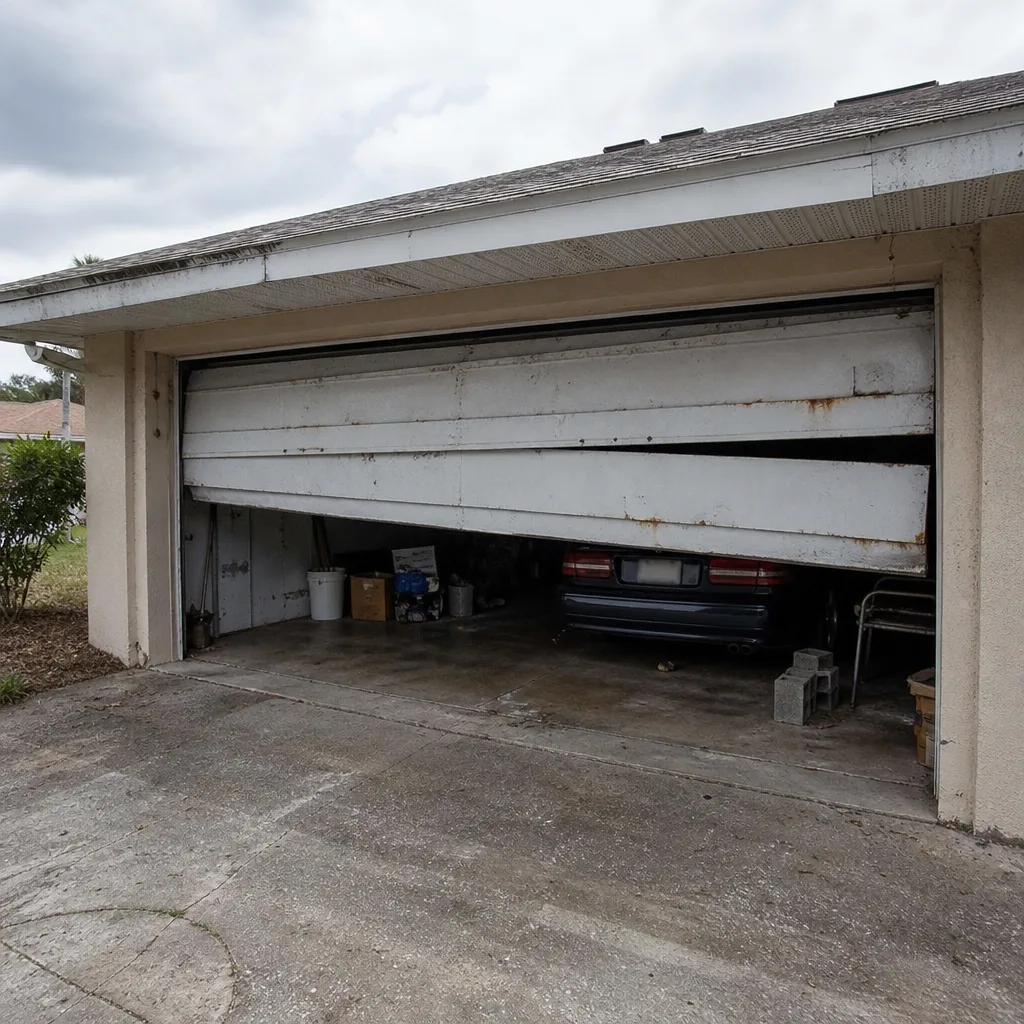
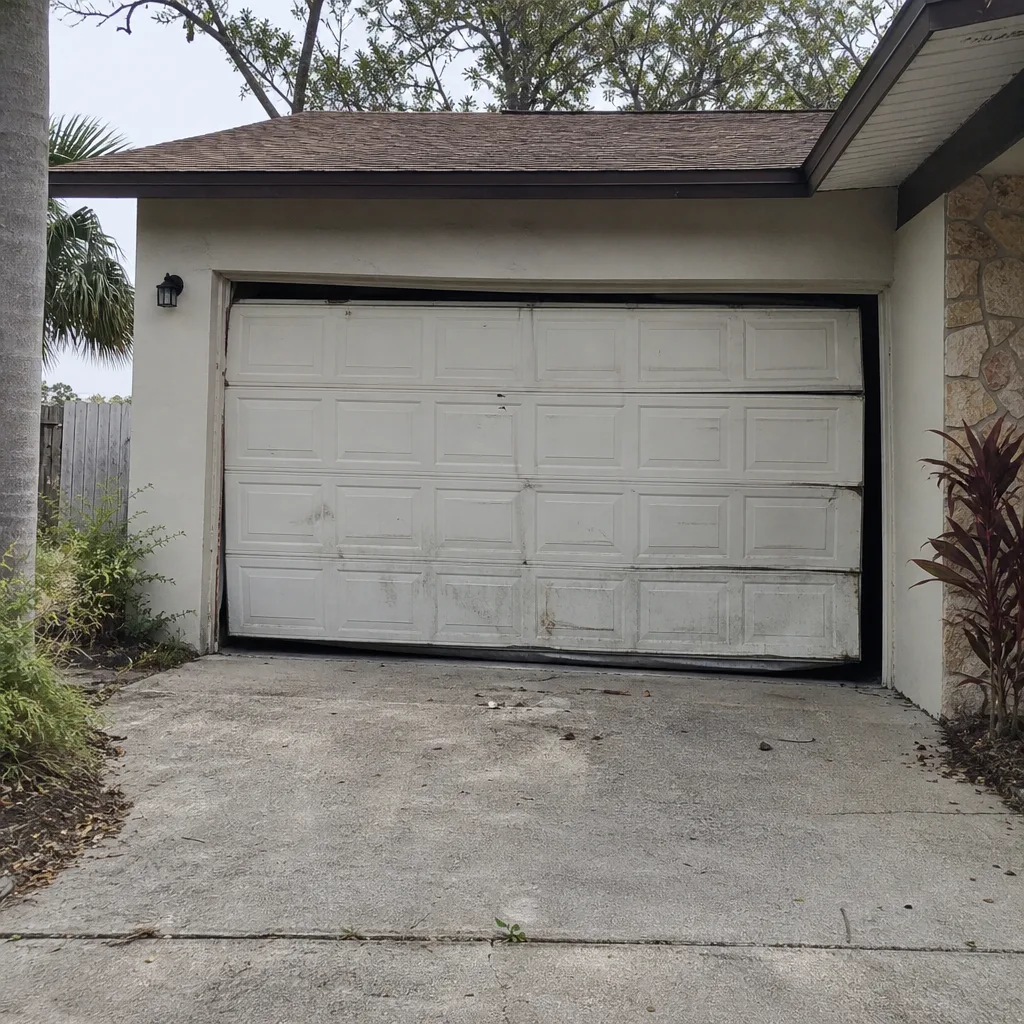
Your door tells you things with its appearance before it ever makes a sound. The trick is knowing which visual cues matter and which are cosmetic. A small scuff on a bottom panel isn’t a warning. A door that’s visibly sagging in the middle or has panels that no longer line up when closed is telling you the balance is off or the torsion system has already lost tension. When you’re inspecting in Largo, walk the full width of the door and look at it from the side, not just head-on, because bend and tilt are easier to spot in profile.
Here’s what to actually look for:
- Bent or dented panels: A single dent from a bicycle or a bumper is cosmetic. Panels that bend along the horizontal seam or bow at the hinges suggest structural stress.
- Gaps at the bottom seal: A visible gap when the door is closed can mean the door isn’t traveling fully down, or the bottom section has shifted.
- Frayed or stretched cables: Look at the cables running along the sides. Frays, kinks, or cables that look slack on one side is a stop-today sign. A snapped cable is genuinely dangerous.
- Rust on the tracks and hinges: In Largo’s humid climate, moisture works on bare steel first, and the fasteners and hinges are where you’ll see it before it becomes a failure.
- Loose or missing hinges and rollers: A hinge that sticks out further than its neighbors or a roller that’s walked out of the track is telling you the door is running unevenly.
Look at the tracks themselves. A track that’s bent outward at one point will make the door grind and can push a roller out entirely. Tracks that look normally aligned but the door still drags are usually a balance problem, not a track problem. If you’re seeing more than one of these signs together, it’s worth a look rather than a guess.
Sound Warning Signs: What Each Noise Means Mechanically
A noise from your garage door is rarely random. Each type of sound points to a specific part of the machine, and knowing the difference is the fastest way to know whether you’re looking at a quick service appointment or a large repair. The single most important rule: a loud popping or snapping bang from above the door is almost always a spring breaking or a cable giving way, and that’s a stop-today sound.
Here’s how to translate what you’re hearing:
- Grinding: Rolling rollers or the tracks themselves are dry, worn, or out of alignment. Often a lubrication and adjustment issue, sometimes a roller replacement.
- Popping: A series of uneven pops as the door travels usually means the torsion spring is binding, or the panels are catching at a hinge. A single loud pop is a different thing, and that’s the spring snap.
- Squealing: Friction at the rollers, hinges, or spring coil. Usually the mildest of the noise symptoms, and often fixable with proper lubrication.
- Rattling: Loose hardware. Hinges, bolts, or the opener rail connecting the door to the head unit. Tighten and check.
- Banging or slamming at the end of travel: The door is dropping too fast at closing. This points to spring tension loss or a door that’s badly out of balance, and it’s a hard stop until it’s checked.
One more sound worth naming: a click followed by silence when you press the remote. That’s usually an opener problem, not a door problem, and it’s often a logic board or a safety sensor issue. Our technicians work on the opener brands you’re most likely to have, LiftMaster, Chamberlain, Genie, and Craftsman, so diagnosing the actual system in front of the door is routine for us. If the door is grinding, our garage door repair team can trace it to the specific part.
The 30-Second Balance Test and What It Tells You About Your Springs
One of the most useful checks you can do yourself is a balance test, because a door that fails it is a door whose springs are not carrying the weight they should be. A balanced door should feel light and stay put when you let go. A door that slams down, drops fast, or feels far heavier than it should is telling you the spring tension is wrong or the spring is failing.
Here’s the test:
- Close the door fully and disconnect the opener by pulling the manual release. Never test with the opener engaged.
- Lift the door by hand to about halfway open. Use a firm grip and a steady stance.
- Let go. A balanced door stays where you left it, or drifts slightly. A door that slides down on its own is not balanced.
- Look at how much effort it took. If the door feels too heavy to lift comfortably, the springs are not doing their job.
A word of caution: if the door feels unusually heavy or a cable looks slack, stop and don’t continue. Spring tension is stored energy, and a failing spring can release while you’re holding the door. This test is for detecting a problem, not for finding out how bad it is. If the door fails the balance test, the right move is to book an inspection. Our garage door spring repair service exists for exactly this, and a professional can identify whether it’s a single spring or if the pair needs replacing together. In our experience, most Largo doors that fail this test are caught in the window where a repair is easy.
Opener Warning Signs: Hesitation, Reversal, and Inconsistent Response
Opener warning signs are often misread as “the remote is dying” when they’re actually telling you something else. A door that reverses before it fully closes isn’t a remote problem, it’s a safety-sensor or force-setting issue. A door that hesitates at the start of travel, or stops halfway, is usually a logic or drive problem. A door that responds inconsistently, sometimes opening fully, sometimes stopping, is more likely to be a limit setting or a failing board.
Here’s how to break down common opener symptoms:
- Opener runs but the door doesn’t move: Often a broken spring or a stripped drive gear. The motor spins, the door stays put. If the door feels heavy, it’s the spring side. If it feels normal but won’t lift, suspect the drive.
- Door reverses immediately on closing: Safety sensors blocked or misaligned, or the down-force limit is set too low. This is a safety feature doing its job. Don’t disable it.
- Intermittent response to the remote: Sometimes the remote battery. Sometimes the opener’s radio board or a limit switch nearing failure. Test with the wall button first: if that works and the remote doesn’t, it’s a remote or receiver issue.
- Door opens fine but won’t close (or the reverse): A single-direction failure often points to a limit switch or a force setting, not a full opener replacement.
Newer smart-home compatible systems add their own layer: app pairing issues, firmware updates, and bridge conflicts can all mimic mechanical trouble. Our garage door opener repair team handles the full spread, from legacy Craftsman units to current LiftMaster and Chamberlain systems. If you’re wondering whether it’s the opener or the door, that’s usually the first thing we sort out.
Watch, Call This Week, or Stop Using the Door Today
Not every symptom carries the same urgency, and treating them all the same costs you money or safety. Here’s how we triage a door into three buckets. The rule of thumb: if the symptom points to the spring, the cable, or the door’s ability to hold itself up, it moves up a bucket.
| Bucket | Symptoms | What to do |
|---|---|---|
| Watch and note | Slight squeal, minor rattle, cosmetic dent, occasional slow start | Note when it started, keep an eye on it, address at the next service |
| Call this week | Grinding at travel, popping during open/close, opener hesitation, door reversing before floor, visible fraying on a cable, one side of the door lifting before the other | Book an inspection. Don’t ignore it. |
| Stop using today | Loud bang or snap from above, door stuck half-open, door slams down at closing, snapped cable, door noticeably sagging on one side, spring visibly broken | Leave it in place, don’t run the opener, call for emergency service |
Urgency is a capability, not a panic button. We offer emergency service for the failures that can’t wait, and if the door in Largo is in the bottom bucket, that’s exactly the situation. Call (855) 774-7112. We answer 24/7. Fast dispatch from 7am to 7pm, Sunday through Friday. If you call outside those dispatch hours, the call is booked into the next opening, and the door stays parked until then. Don’t force a stuck door, even if you’re on the way out the door. A jammed panel or a broken spring under load does more damage when it’s forced.
Largo-Specific Wear Patterns You’ll See Before Failure
Largo’s climate has a specific effect on garage door hardware, and once you know the pattern you’ll spot it before it fails. The humidity here is sustained for much of the year, which means bare steel, fasteners, hinge pins, and the bottom panel edge get moisture on them consistently. That shows up first as surface rust on the hinges, then as sticking at the hinge points, then as uneven travel. If you’re seeing rust blooming on the hinges and the door is starting to feel sticky, the mechanical wear has already started.
Panels tell their own story. Wood-look steel panels from Clopay, Amarr, and Wayne Dalton can absorb moisture at the seams, and paint failure at the bottom edge is often the first sign. Once the paint goes, the steel underneath starts to corrode, and the panel loses both appearance and rigidity. Bottom sections of doors in Largo tend to go first because they see the most moisture and the most direct sun. When you’re inspecting, look at the bottom panel seam first and work up.
Track and roller wear follows the same moisture pattern. Rollers on the ground-level track get rained on when the door’s up, and a dry or corroded roller grinds. Lubrication helps if you keep up with it. If you’re seeing rust on the roller stems and grinding on the track, the roller needs replacing, not just greasing.
The opener side has its own Largo pattern: exterior-mounted wall buttons and sensors take sun and moisture, and we see sensor misalignment from a bumped mount more often than a truly failed sensor. Before you replace an opener, check whether the sensor bracket has shifted. If you’re wondering about a full replacement versus a repair, the answer is usually one or the other, and a proper diagnosis settles it. Our Largo Garage Door Repair Pros team handles both, and we work on the brand you already have.
Why Spring and Cable Work Isn’t a Homeowner Job
The most serious warning signs on any garage door point at the torsion spring or the cables, and this is the one area where we ask every Largo homeowner to stop and call. A torsion spring holds the door’s full weight under tension at all times. When it’s failing, it can release without warning, and the injury risk is real. Cables under tension fail the same way. This is why we don’t give step-by-step repair instructions for spring or cable work, and why we recommend a trained professional for both. The service is one of the most technically demanding parts of garage door work for a reason.
What we will tell you is how the diagnosis works. A technician checks the spring for winding, wear, and rust, tests the door’s balance, measures the drum and cable condition, and confirms the door is aligned on its tracks. If a spring is replaced, a matched pair is usually replaced together, since the springs are wound to work in tandem. That’s the kind of job that belongs with a professional team, and one of the reasons we call out our garage door spring repair service as a dedicated offering. The safety caveat is simple: if you suspect the spring or a cable, don’t run the door, don’t try to adjust it, and don’t stand under the door while it’s open.
Common Mistakes to Avoid
- Ignoring a slow door because it still opens. A slow door is a spring telling you it’s lost tension. Waiting until it snaps costs more, because a snapping spring can also damage the opener, the cables, and the bottom panel.
- Greasing the track instead of the moving parts. Track surfaces should be clean and dry. Lubricant goes on the rollers, hinges, and spring coil, not the track rail. Greasing the track makes the door slide unevenly and picks up grit.
- Disabling the safety sensors when the door reverses. If the door reverses when closing, the sensors are doing their job. Disabling them is dangerous and often the sign of a sensor that needs alignment, not a system that needs bypassing.
- Replacing the opener when the spring is the problem. If the motor runs and the door doesn’t lift, the opener may be fine and the spring is the issue. Diagnostic first, buy second. Our team diagnoses the actual system in front of the door, not a generic stand-in.
- Forcing a jammed door. A door stuck halfway up, especially if you can hear the motor running, is a machine under stored energy. Forcing it can crack a panel or bind a cable. Leave it and call.
- Skipping the balance test after any new install. Even a brand-new door should be tested. If your new door is hard to lift by hand, that’s a warranty conversation, not a wait-and-see.
- Not noting when a symptom started. “It started two weeks ago and now it’s worse” is a much faster diagnosis than “it just started.” For a homeowner in Largo, a two-line note on the phone is often the difference between a single service call and two.
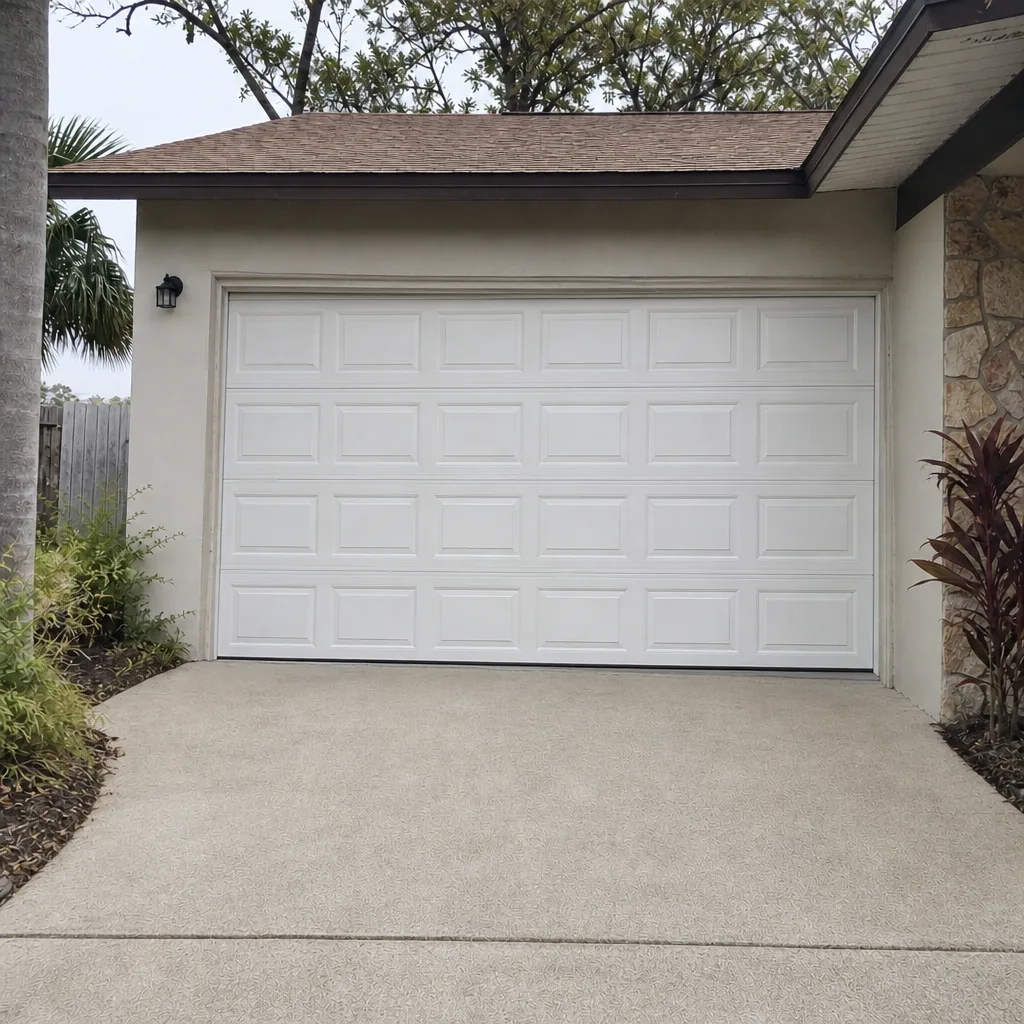
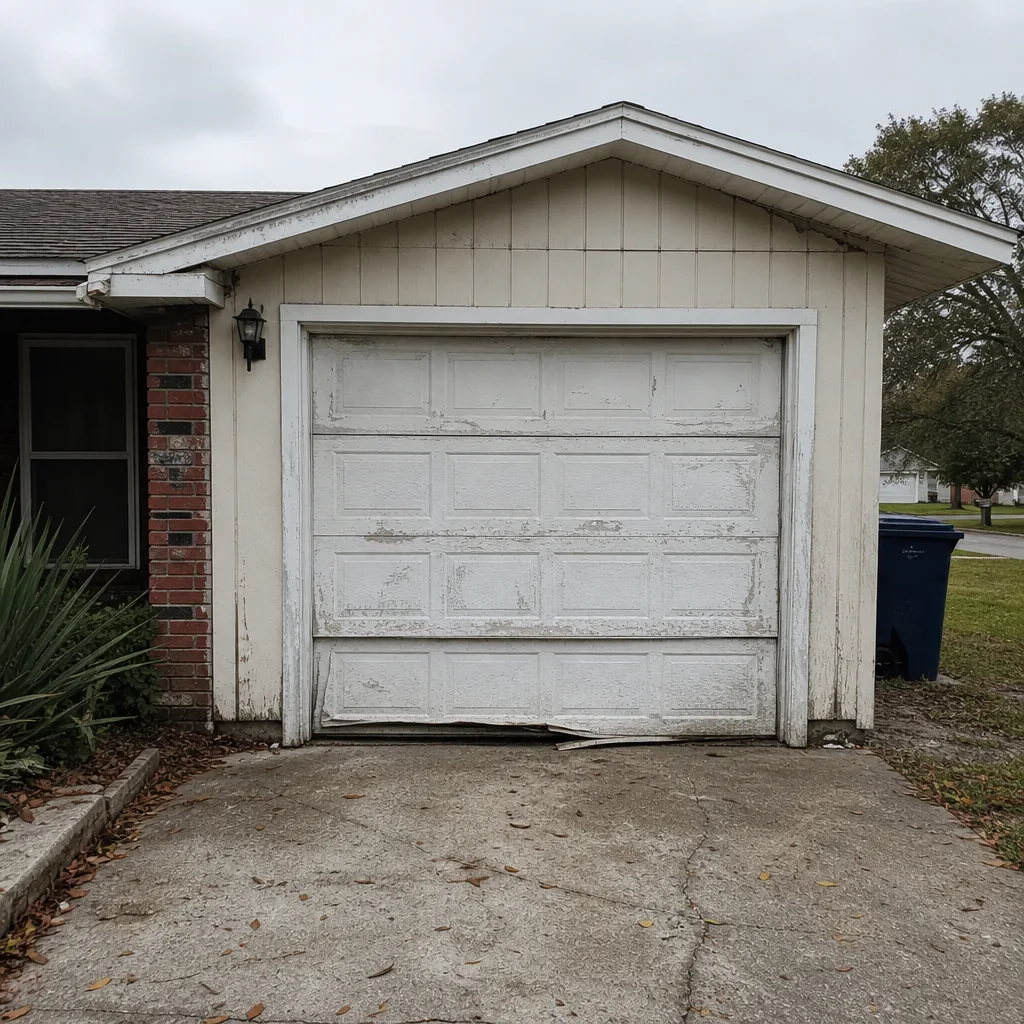
See the difference
 Before
 After
 Before
 After
 Before
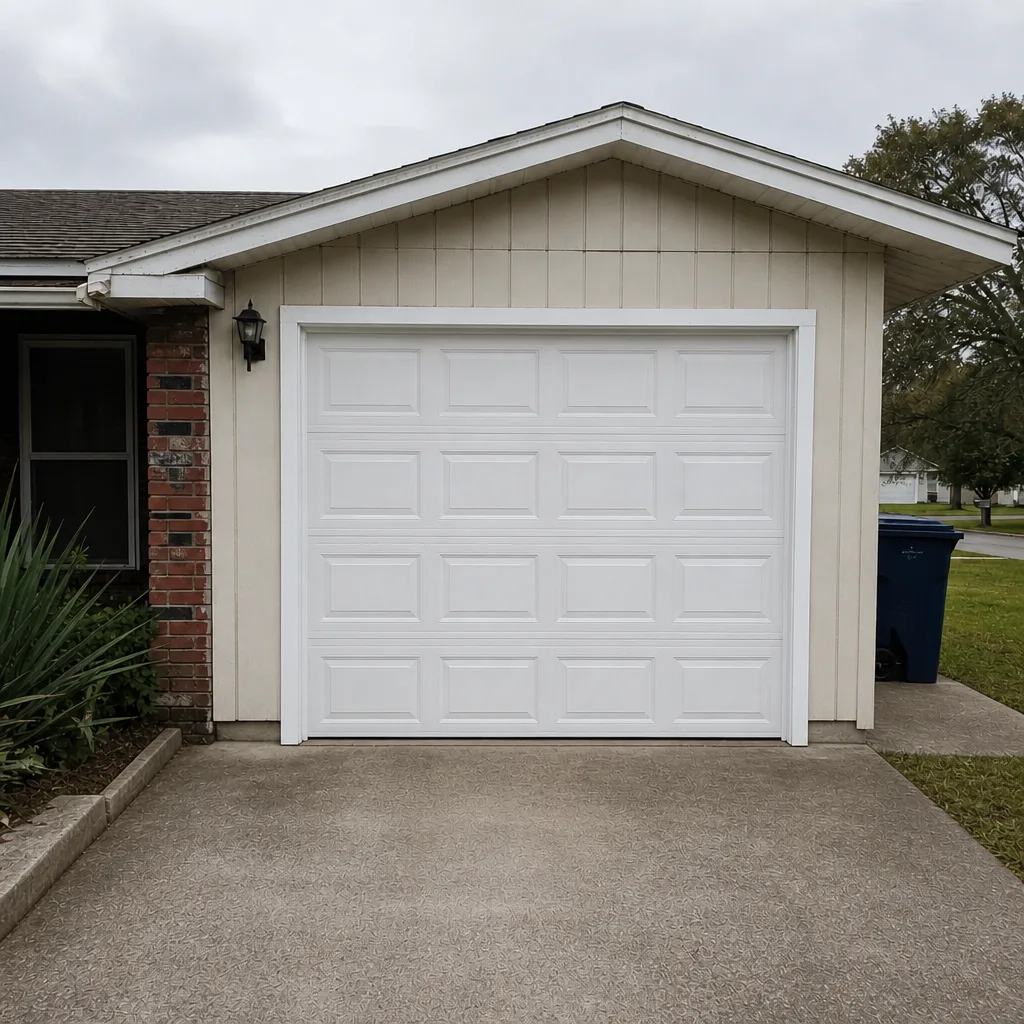 After
When to Call a Professional
Call a professional when the door slams, reverses, sags on one side, or makes a sound you can’t identify with confidence. Also call when the door feels much heavier than usual, when you can see fraying on a cable, when the spring looks broken, or when the opener runs but the door doesn’t move. These are the situations where a mistake costs more than the repair. Largo Garage Door Repair Pros offers free estimates in Largo. Call (855) 774-7112. Our technicians have up to 13 years of experience, and we work on the full range of springs, cables, panels, and openers. If it’s urgent, emergency service is a real capability, not a promise we put on the site and forget.
Frequently Asked Questions
The first sign is usually a door that feels heavy when you lift it, combined with a slow-open on the opener. A spring losing tension makes the opener work harder to raise the door, and you’ll notice the door starts to feel much heavier than it used to. If you see a gap in the spring coil or hear one loud pop, the spring has snapped and the door should not be used. Call (855) 774-7112 for an exact quote. Estimates are free.
No. A torsion spring is under enough tension to cause serious injury if it releases during handling, and cable work carries the same risk. The right move is to leave the door closed, keep hands and tools clear, and have it looked at by a trained professional. Call (855) 774-7112. We answer 24/7. Fast dispatch from 7am to 7pm, Sunday through Friday.
Not urgent in the stop-today sense, but it belongs on this week’s list. An opener that hesitates on lift or stops midway is often a sign of a drive issue, a limit setting, or a spring that’s making it work too hard. If the door itself moves freely by hand, the opener is the likely cause. If the door is heavy by hand, the spring is. Our team will diagnose which one before any replacement is discussed. Call (855) 774-7112.
The safety sensors are blocked, misaligned, or the down-force setting is too low. This is a designed safety response and should not be bypassed. Check that nothing is in the sensor path, and that both sensor lenses are aligned and clean. If the problem persists, it’s a sensor or limit-switch diagnosis, which a technician can do in one visit. Call (855) 774-7112 for a free estimate.
It affects wear, but it doesn’t make every door fail. The humidity here means hinges, tracks, and the bottom panel seam see moisture more consistently than in drier climates, and that shows up as surface rust and sticking hinges before it becomes mechanical failure. Annual checks and proper lubrication extend the life of the hardware considerably. If you’re seeing rust at the hinges or the bottom seal, that’s worth looking at. Call (855) 774-7112.
For urgent failures, yes, same-day is the goal. We answer 24/7 and dispatch from 7am to 7pm, Sunday through Friday. If a call comes in outside dispatch hours, it’s booked into the next opening. For a door that’s stuck, has a broken spring, or has a snapped cable, don’t force it. Call (855) 774-7112 and we’ll set the fastest available time.
The Bottom Line
Garage doors fail in a sequence. A slow door becomes a heavy door, a heavy door becomes a grinding door, and a grinding door becomes the one that snaps at 7 a.m. The discipline is to catch the door on the first step, not the last. Watch the balance, listen for the sounds, keep an eye on rust at the hinges and panel seams, and don’t talk yourself out of a symptom because the door still opens. The three buckets matter: watch, call this week, and stop today. The last bucket is the one where the phone call is worth more than the repair. For us at Largo Garage Door Repair Pros, the job is to read the door correctly and give you a fix for the exact system you have. If any of these signs look familiar, call (855) 774-7112 for a free estimate.
Written by the team at Largo Garage Door Repair Pros.