
Last updated November 23, 2026
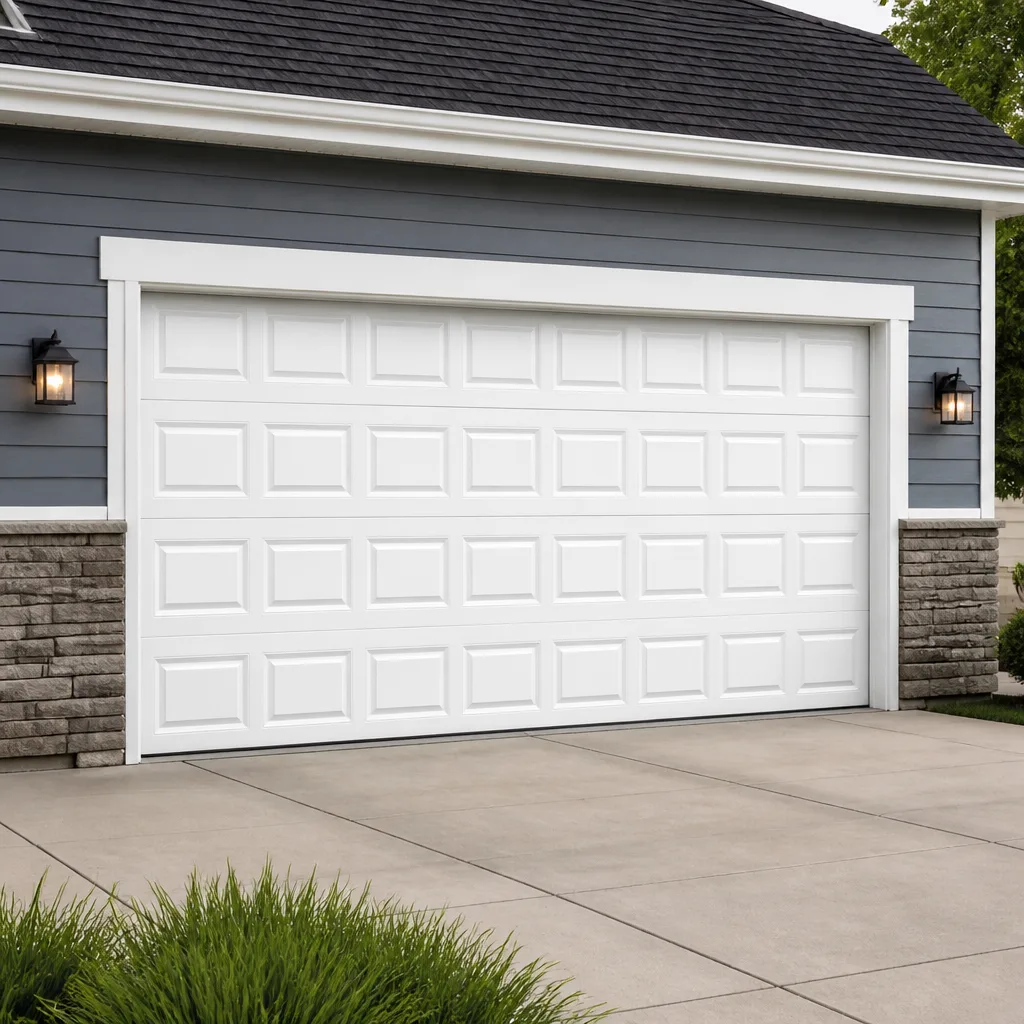 Raised-panel steel
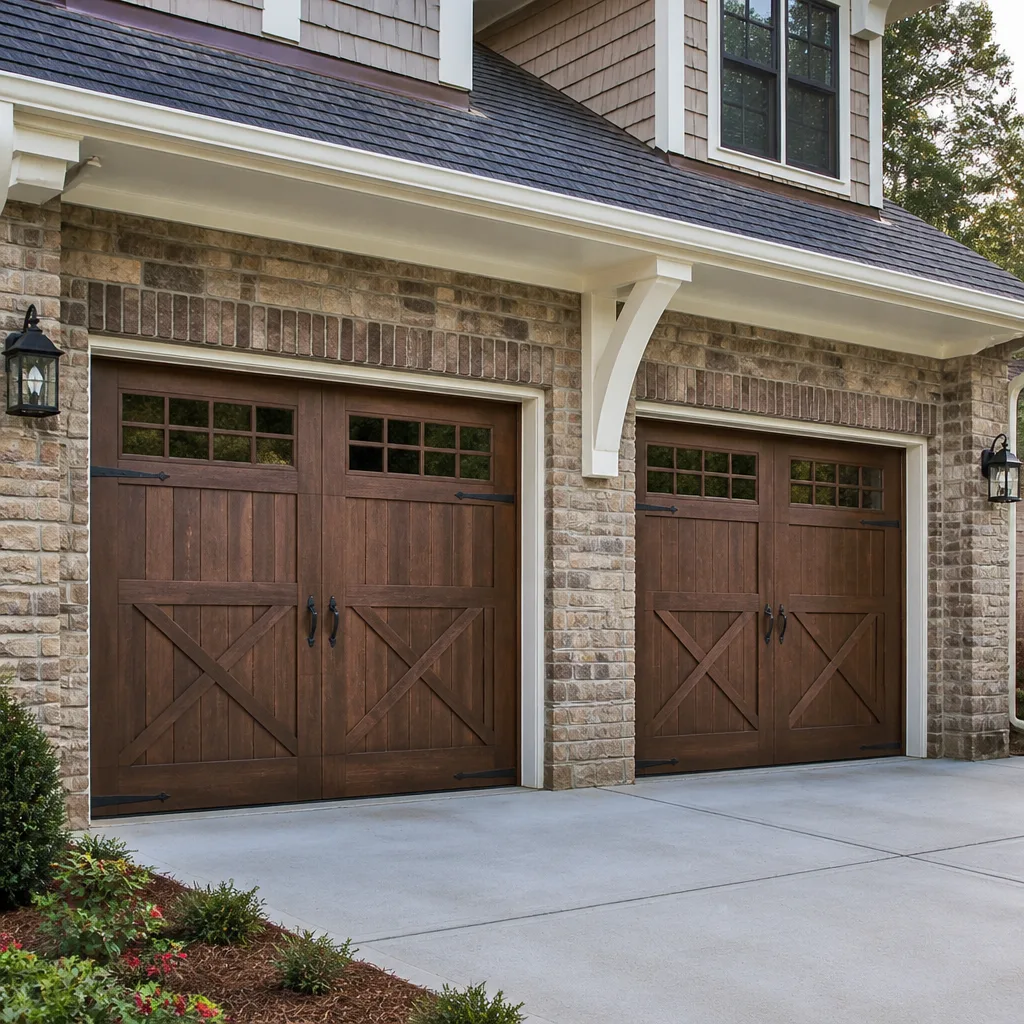 Carriage house
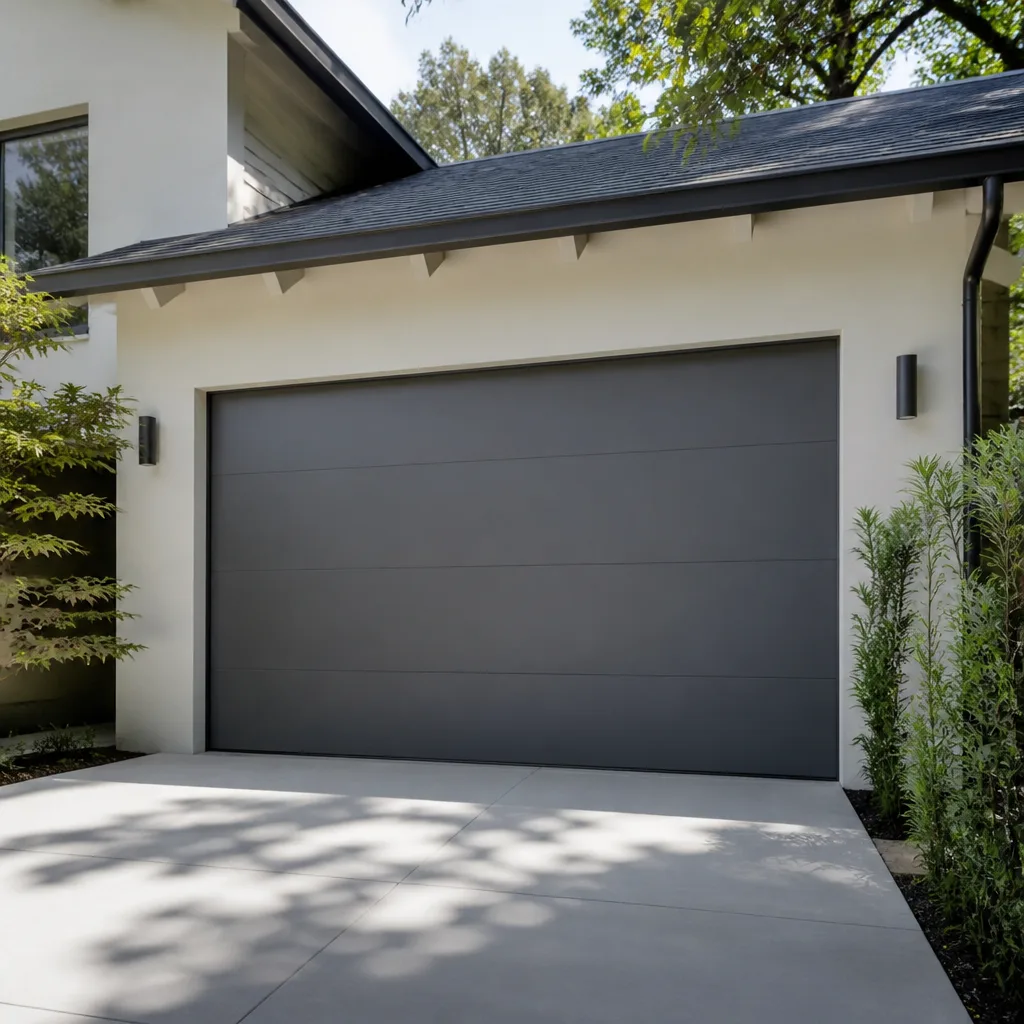 Modern flush
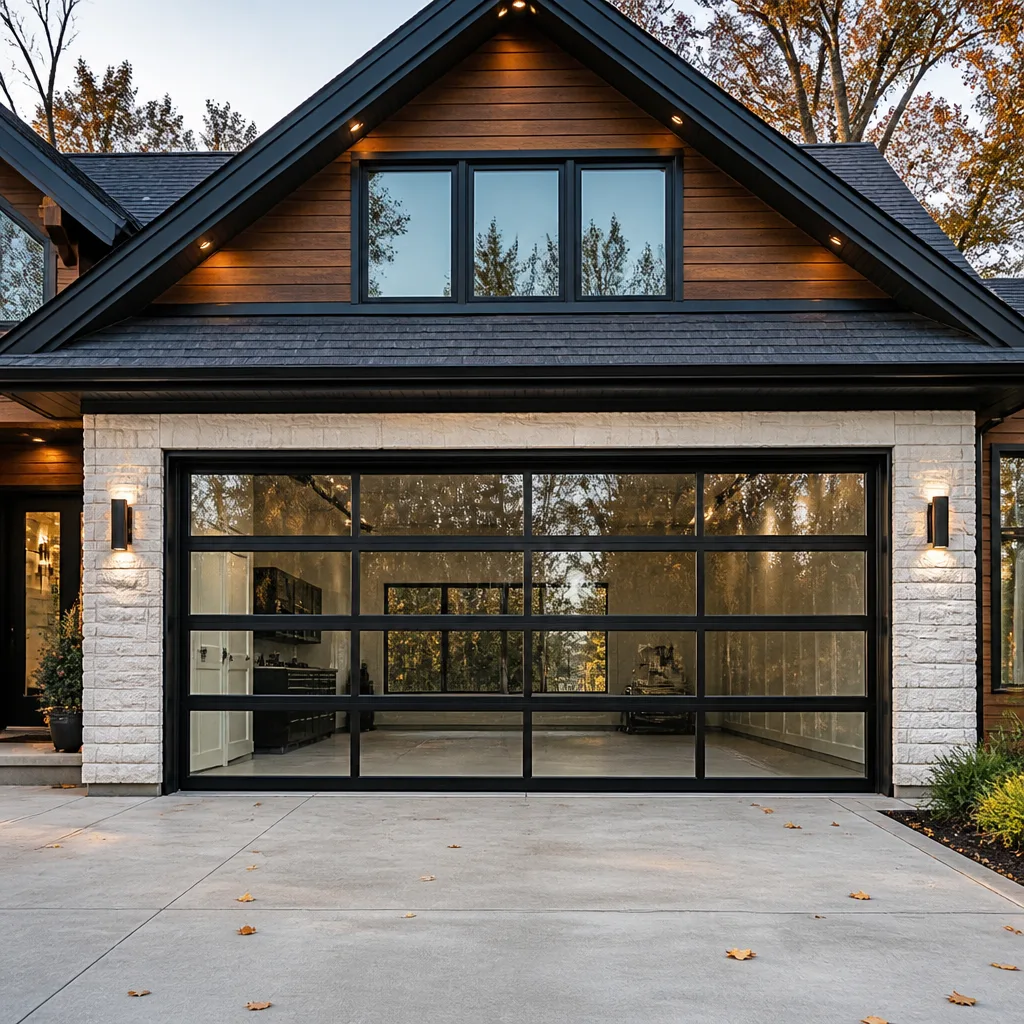 Full-view glass
 LiftMaster openers
 Chamberlain openers
Full 25-point door and opener safety check with every visit - springs, cables, rollers, tracks, and your LiftMaster or Chamberlain opener included
You get a price before we start. It does not change when the pro arrives.
Get your free estimateSeasonal Garage Door Care for Largo: Year-Round Homeowner’s Guide
Largo doesn’t have a winter garage door problem. It has a June through November problem, and homeowners who treat their door like it needs a northern four-season checklist miss the two months that actually matter most. You’ll see advice online about winterizing, thawing, and de-icing. None of that applies here. What does apply is a two-season rhythm: the dry stretch and the wet stretch, with a hard deadline on each end called hurricane season. This guide walks through what to inspect, what to tighten, what to replace, and when to stop touching it and call someone. If you take one thing away, make it this: in Largo, prep happens before June 1 and inspection happens after every named storm, whether the door looks fine or not.
Quick Answer
Garage door care in Largo follows two seasons, not four. Before June 1 each year, inspect and reinforce the door for hurricane season; after any high-wind event, inspect tracks, panels, springs, and seals for damage that isn’t visible from the driveway. In the dry months (roughly November through May), focus on lubrication, seal integrity, and balancing; in the wet months, focus on humidity control, bottom weatherstripping, and spring tension checks. A door that “seems fine” after a storm often isn’t.
Styles & brands we work with
- Raised-panel steel
- Carriage house
- Modern flush
- Full-view glass
- LiftMaster openers
- Chamberlain openers
Table of Contents
- Why Largo Has Two Garage Door Seasons, Not Four
- The Pre-Hurricane Season Checklist: What to Do Before June 1
- Post-Storm Inspection: What Wind Damage Actually Looks Like
- Dry Season vs. Rainy Season: How Each One Stresses Your Door Differently
- Spring Tension and Florida Temperature Swings: Spotting Trouble Early
- Year-Round Humidity Management for the Garage Interior
- Opener Care Through the Seasons: What to Check and When
- When to Call a Professional
- Common Mistakes to Avoid
- Frequently Asked Questions
Why Largo Has Two Garage Door Seasons, Not Four
Most garage door maintenance calendars are written for places with a real winter: cold snaps, frozen hinges, snow load on roofs, salt on the roads. Largo doesn’t have those. What Largo has is a dry season and a rainy season, and the rainy season overlaps with hurricane season. That overlap is what makes the timing of your maintenance different from what you’ll read on most national sites.
The dry season runs roughly November through May. Humidity drops, rain becomes less frequent, and the door’s moving parts see their most stable conditions of the year. This is when you want to do the lubrication, seal inspection, and balance checks, because the door is at its easiest to work on and the conditions are least likely to hide a developing problem.
The rainy season runs roughly June through November. Humidity climbs, afternoon storms become routine, and the door’s seals, tracks, and springs face their hardest test of the year. This is also when a hurricane or tropical system can stress a door beyond what it was designed to handle.
The practical takeaway: your heaviest maintenance window is the dry season, and your most important inspection window is the twenty-four hours after any named storm. Everything else is a quick monthly look.
- Dry season (Nov – May): Lubrication, balance checks, seal replacement, opener testing, hardware tightening.
- Rainy season (Jun – Nov): Humidity control, bottom weatherstripping checks, spring tension monitoring, post-storm inspection.
- Hurricane season (Jun 1 – Nov 30): Pre-season reinforcement, post-storm assessment, and a low tolerance for “it looks fine.”
If you’re new to the area, or new to owning a home with a garage door, this rhythm is one of the first things worth learning. It’s also why Largo Garage Door Repair Pros treats spring and fall as ordinary maintenance windows and treats the weeks before and after June 1 as the ones that actually matter.
The Pre-Hurricane Season Checklist: What to Do Before June 1
June 1 is the start of the Atlantic hurricane season. In Largo, that date is a better maintenance trigger than any calendar season, because a garage door is one of the largest openings in the structure of a home and one of the most commonly overlooked. Here’s what we recommend walking through each year between April and the end of May.
- Inspect the door panels for cracks, dents, and separation. Look at each panel from the inside, not just the driveway. A hairline crack at a panel seam can widen under wind load.
- Check the hinges and rollers for play. Grab a hinge and try to wiggle it. If it moves more than a millimeter or two, the fastener is loose or the hinge is wearing out.
- Tighten every bolt and lag screw you can reach safely from the floor. That means the track brackets, the hinges, and the opener’s mounting hardware, but not the springs or anything above head height.
- Inspect the tracks for bends and misalignment. Run your hand along the inside edge of each vertical track. A track that isn’t straight will bind the door as it moves, and a binding door can come off the track in a wind event.
- Check the bottom weatherstripping for gaps and stiffness. Press it with your thumb. If it doesn’t spring back, it won’t seal, and a door that won’t seal becomes a wind-driven rain entry point.
- Test the door’s balance. Disconnect the opener and lift the door halfway by hand. It should stay where you put it. If it drifts down, the springs are losing tension.
- Test the auto-reverse safety feature. Place a piece of wood flat on the floor in the door’s path and close the door. It should reverse on contact. Also wave an object in front of the photo-eye sensors on each side of the door.
- Check the opener’s force settings and battery backup if it has one. A door that’s harder to move than it used to be may need the opener’s force adjusted, or the spring may be the real issue.
That’s the checklist. Most of it you can do in an afternoon. The rest of it is a phone call. If any of the steps turn up something that worries you, especially a track that’s bent, a panel that’s cracked, or a spring that’s lost tension, get it looked at before June 1, not after.
The reason is simple: the work that costs the least is the work you do before something fails, not after. A hinge that’s tightened in May is a hinge that won’t rip out of a panel in September. A track that’s aligned in April is a track that won’t bind the door in August. A bottom seal that’s replaced in May is a seal that keeps the water out in June.
Post-Storm Inspection: What Wind Damage Actually Looks Like
A garage door that “seems fine” after a storm often isn’t. Wind damage on a garage door is usually internal, and it shows up in places most homeowners don’t think to look. After any named storm, or any strong line of thunderstorms with sustained gusts, do this inspection within twenty-four hours.
- Look at the door from inside the garage, not the street. Wind pushes panels from the outside; the damage often shows on the inside face.
- Check every panel for cracks at the seams and around the hinges. A crack that wasn’t there before the storm is a panel that’s compromised.
- Slide the door by hand (opener disconnected) and listen. Grinding, popping, or scraping is a track or roller problem that wasn’t there before.
- Look at the track profile along its full length. A track that’s out of alignment will have a visible kink or bow, often at a bracket.
- Check the bottom seal for gaps, tears, or displacement. Wind can push a bottom seal out of its retainer in minutes.
- Test the auto-reverse feature and the photo-eye sensors. Wind can knock a sensor out of alignment or move the track enough that the door’s close cycle is compromised.
- Check the opener’s mounting hardware at the ceiling. A storm can loosen lag screws, and a loose opener can lift off its mount.
- Run the door through a full open-close cycle and watch it. If it wobbles, slows, or stops partway, stop using it until it’s been looked at.
The single most common mistake after a storm is assuming a door that still opens and closes is a door that’s safe. In our experience, most post-storm damage we see is on doors the homeowner said were “working fine.” The track was off by a quarter inch. A hinge was bent. A panel was cracked on the inside. None of those would stop the door from operating, and all of them make the next storm more dangerous.
If the inspection turns up anything on that list, especially track or panel damage, stop using the door and call for a pro to take a look. A compromised door can fail hard, and a failing garage door is a safety issue, not a convenience issue. Our garage door repair service handles post-storm assessment and fixes as a routine part of what we do in Largo.
Dry Season vs. Rainy Season: How Each One Stresses Your Door Differently
Seal integrity is the part of your door that behaves most differently across the two seasons, and bottom weatherstripping is the part that shows it first.
Dry season. Rubber and vinyl bottom seals shrink and stiffen when humidity drops. A seal that was snug in September can develop small gaps by February, especially at the corners where the door meets the frame. Those gaps don’t matter much when it’s dry. They matter a lot when the first June storm pushes rain sideways.
Rainy season. The same seal swells slightly as humidity climbs, which can mask existing gaps. A seal that was visibly gapped in March may look fine in July, and then fail the first time a storm pushes water against it. That’s why we recommend inspecting the seal in the dry season, when it’s at its smallest, not in the rainy season, when it looks best.
Track behavior follows the same pattern. Metal tracks expand and contract with temperature, and the small screws and brackets that hold them in place can loosen over the course of a year. In the dry season, that shows up as a door that drifts slightly to one side as it closes. In the rainy season, it shows up as a door that’s harder to seal against the frame, which lets humid air into the garage.
Panels respond differently too. Wood-composite panels, common on many Clopay and Amarr doors, can absorb moisture at the edges if the seal fails, and steel panels can develop surface rust at any scratch that lets moisture in. Both of those are slow processes, and both are much easier to catch in spring than in the middle of a storm.
- Dry season focus: Replace stiff or shrunken bottom seals, tighten track hardware, check panel edges for exposure.
- Rainy season focus: Watch for water intrusion at the bottom of the door and around the frame, and watch for rust starting on steel panels.
- Year-round: Lubricate hinges, rollers, and springs with a garage-door-rated lubricant, not general-purpose oil, which attracts dust.
Spring Tension and Florida Temperature Swings: Spotting Trouble Early
Springs are the part of your garage door that do the most work and get the least attention. They’re also the part that fails most dramatically. A broken spring is loud, sudden, and in some cases genuinely dangerous. The good news is that most spring failures announce themselves well before they happen, and the signal is easier to read than most homeowners realize.
The signal is balance. A garage door in proper tension holds its position when you disconnect the opener and lift it halfway by hand. A door with a spring that’s losing tension will drift down under its own weight. The drift is usually small at first, maybe an inch or two over the course of twenty seconds. It gets worse over the course of weeks. By the time the door won’t hold at all, the spring is close to failing.
Florida’s temperature swings are what make this worth checking on a schedule. Springs are steel, and steel under load behaves differently at different temperatures. A spring that’s tuned in the cool of a January morning can develop slightly different tension by the heat of an August afternoon. That doesn’t mean springs fail every time the temperature changes, but it does mean a spring that’s already near the end of its life is more likely to fail during a hot stretch than during a mild one.
How to check without doing anything dangerous: with the door closed and the opener disconnected, lift the door by hand to about waist height and let go. If it stays, tension is roughly correct. If it drops even a little, note how far and check again in a week. If it drops faster or farther, the spring is losing tension and needs to be looked at.
What not to do: don’t try to adjust, wind, unwind, or replace a torsion spring yourself. Torsion springs are under enormous tension and can cause serious injury if they release unexpectedly. Extension springs can snap with enough force to damage the door and anything in its path. This isn’t a job for a homeowner with a set of wrenches. If your balance check turns up a problem, that’s the point to call. Our garage door spring repair service exists for exactly this reason, and it’s one of the most safety-critical jobs in the trade.
One more thing on springs. A single spring replacement is one price; a matched pair is roughly twice that, because a pair is usually replaced together. If one spring broke and the other is the same age, replacing just one means the second one is likely to fail soon, and you’ll pay for two visits instead of one. Ask for a written estimate that shows both options before anything starts.
Year-Round Humidity Management for the Garage Interior
Humidity is the quietest problem a garage door has. It doesn’t announce itself with a bang the way a broken spring does. It works over months, on the hinges, the rollers, the springs, the bottom seal, and the opener’s electronics. In Largo, the annual humidity pattern is significant enough that managing it is worth doing on purpose rather than letting the garage ride it out.
The first step is to find out where the humidity is coming from. It’s not always the door. A garage that shares a wall with a conditioned house, or a garage with a water heater or HVAC air handler inside it, will pick up moisture from those sources too. But the door is the most common point of entry because it’s the largest opening and the one most exposed to weather.
- Seal the bottom first. A bottom weatherstripping that seals correctly keeps ground moisture from wicking into the door and keeps rain from pushing under the door in a storm.
- Check the side and top seals. Most garage doors have a frame seal on the sides and top. Those seals dry out and crack over time, and they’re cheap to replace.
- Ventilate the garage when you can. A garage with no airflow holds moisture. If the garage has windows or vents, use them during the dry season.
- Keep the door’s moving parts lubricated. Lubrication doesn’t stop rust, but it slows it down, and it keeps the hinges and rollers moving smoothly when humidity is high.
- Watch for rust on springs and steel panels. Surface rust on a spring is a warning sign. Surface rust on a panel is cosmetic but worth watching, because it can become structural if it goes deep.
- Check the opener’s electronics. Humidity can affect circuit boards, especially on older openers. If an opener starts behaving unpredictably in the rainy season, humidity is one of the first things we look at.
The bottom seal is the one to prioritize. It’s the cheapest part on the list, it’s the most exposed, and it’s the one that does the most work in a rain event. Replacing a bottom seal takes less time than most homeowners expect, and it makes the biggest difference to how dry the garage stays. It also matters for the door’s long-term health, because a door that stays dry is a door whose panels and hinges last longer.
Opener Care Through the Seasons: What to Check and When
The opener is the part of the system that sees the most use and gets the least maintenance. It’s also the part whose failures are the least dramatic, which means they’re the easiest to ignore. An opener that’s losing its settings, hesitating, or reversing for no reason is an opener that needs attention now, not later.
During the dry season, do these checks:
- Test the safety reverse function with a piece of wood on the floor.
- Test the photo-eye sensors with an object in the door’s path.
- Listen to the opener as it runs. Any grinding or squealing is a sign of a worn gear or a dry chain, belt, or screw drive.
- Check the opener’s mounting hardware at the ceiling. Vibration loosens it over time.
- If the opener has a battery backup, test it.
During the rainy season, add:
- Check that the opener’s housing isn’t accumulating condensation.
- Watch for doors that reverse for no reason; that’s often a photo-eye or logic board issue that humidity aggravates.
- Check the wall button and remote for delayed response; that’s often a receiver issue or a dying battery.
Brand-specific knowledge matters here more than most homeowners realize. A LiftMaster opener and a Genie opener use different logic boards, different force settings, and different safety-reverse behaviors. A technician who knows the brand you own diagnoses the actual system, not a generic stand-in. That’s the approach we take across the eight brands we work on: LiftMaster, Chamberlain, Genie, Clopay, Amarr, Wayne Dalton, Craftsman, and Raynor. If your opener needs a closer look, garage door opener repair covers diagnosis and fixes across all of them.
See the difference
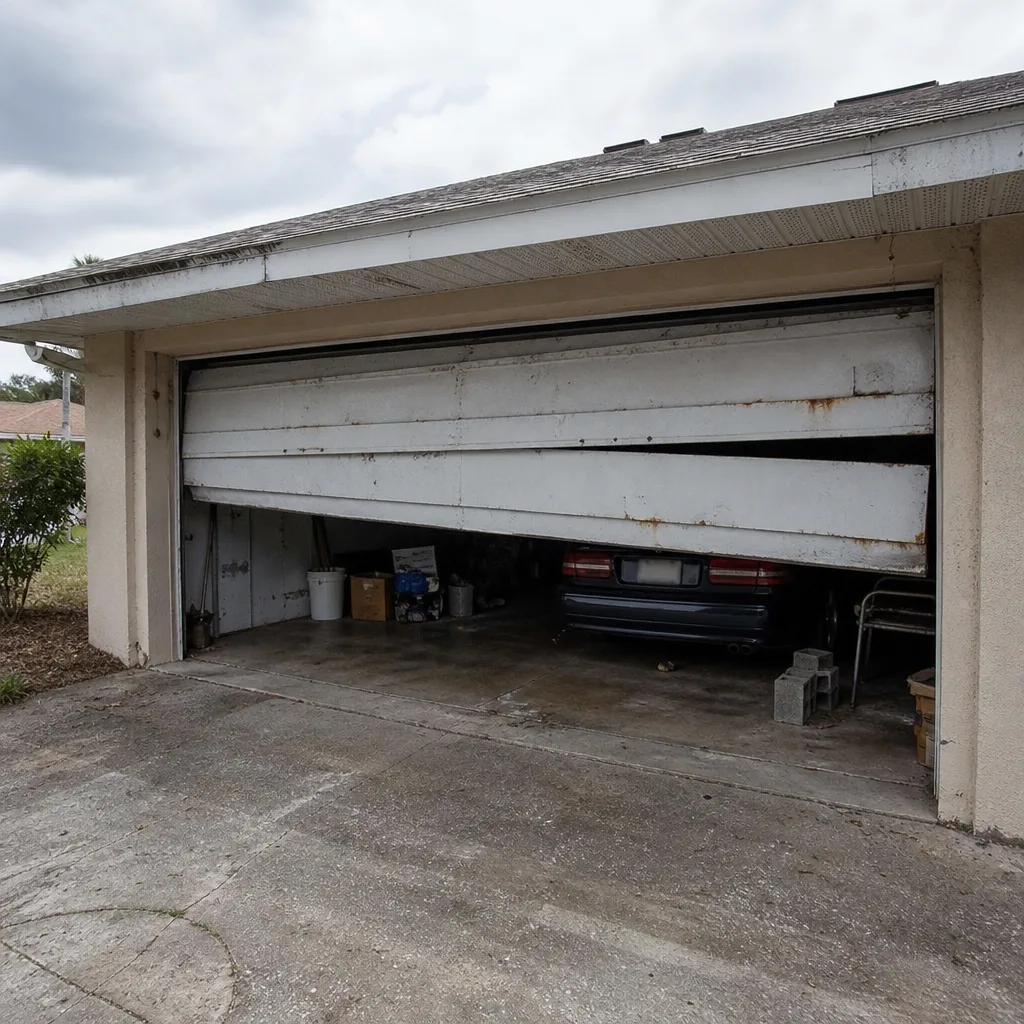 Before
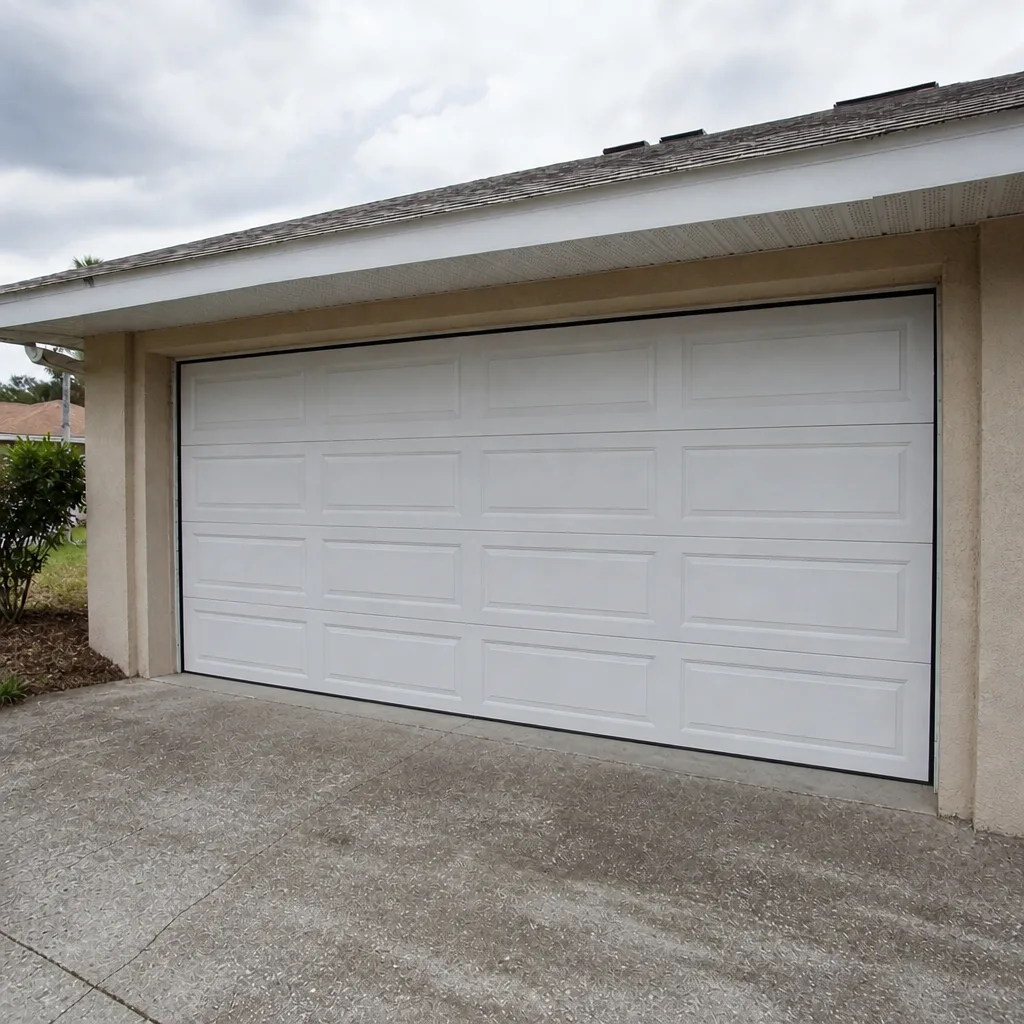 After
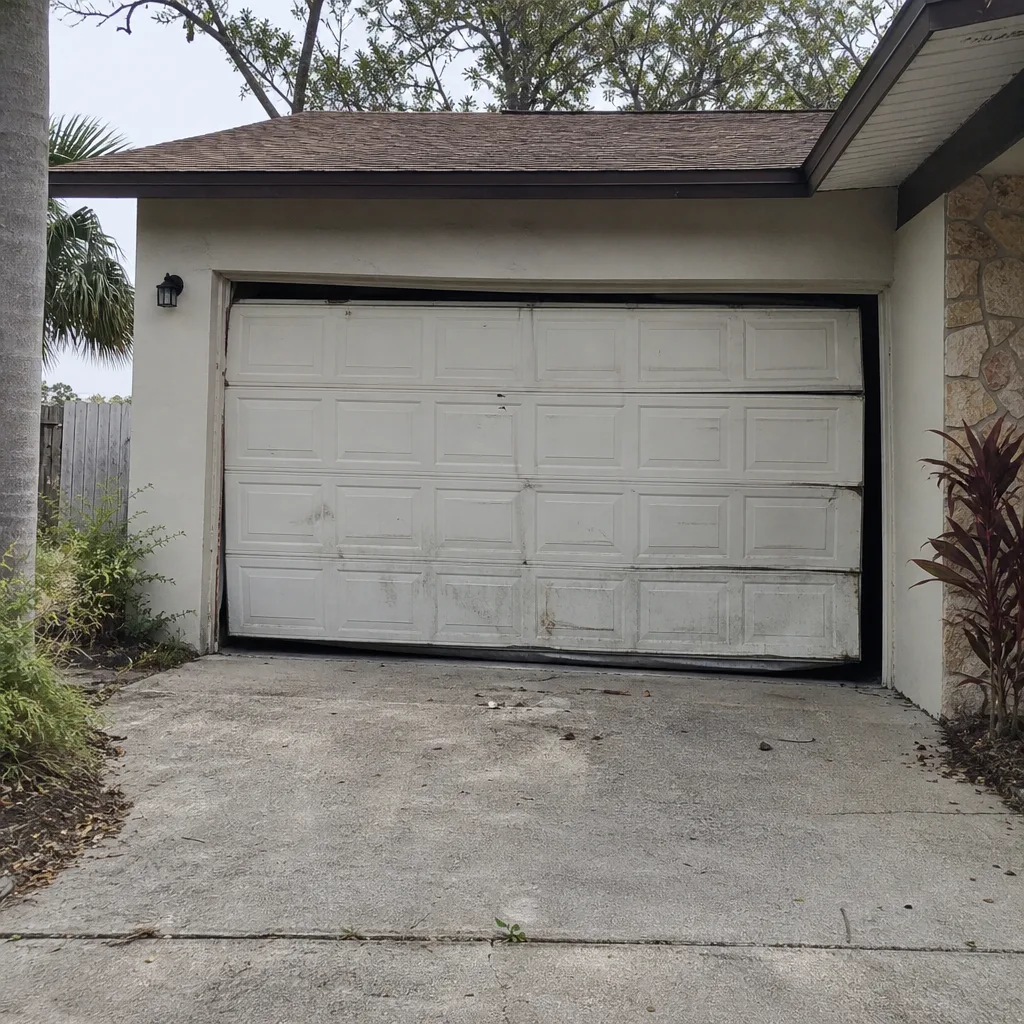 Before
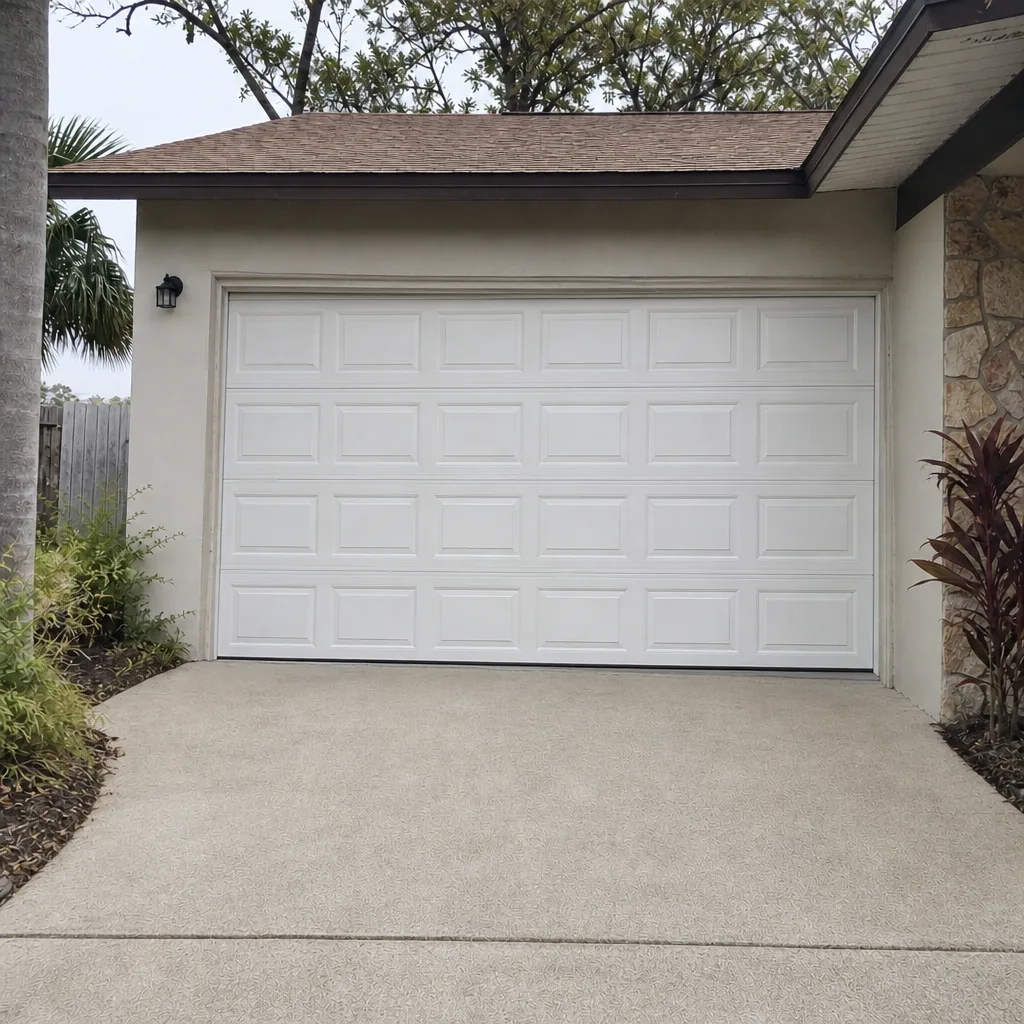 After
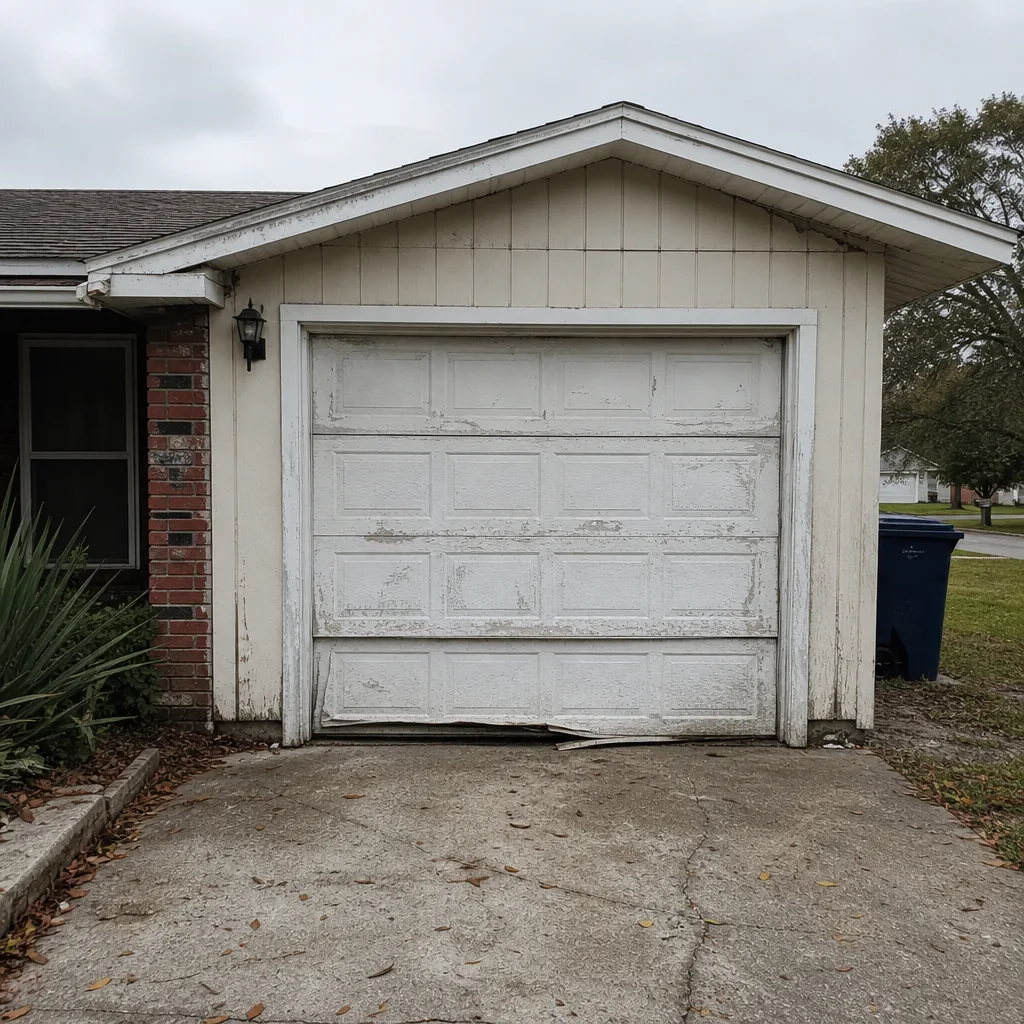 Before
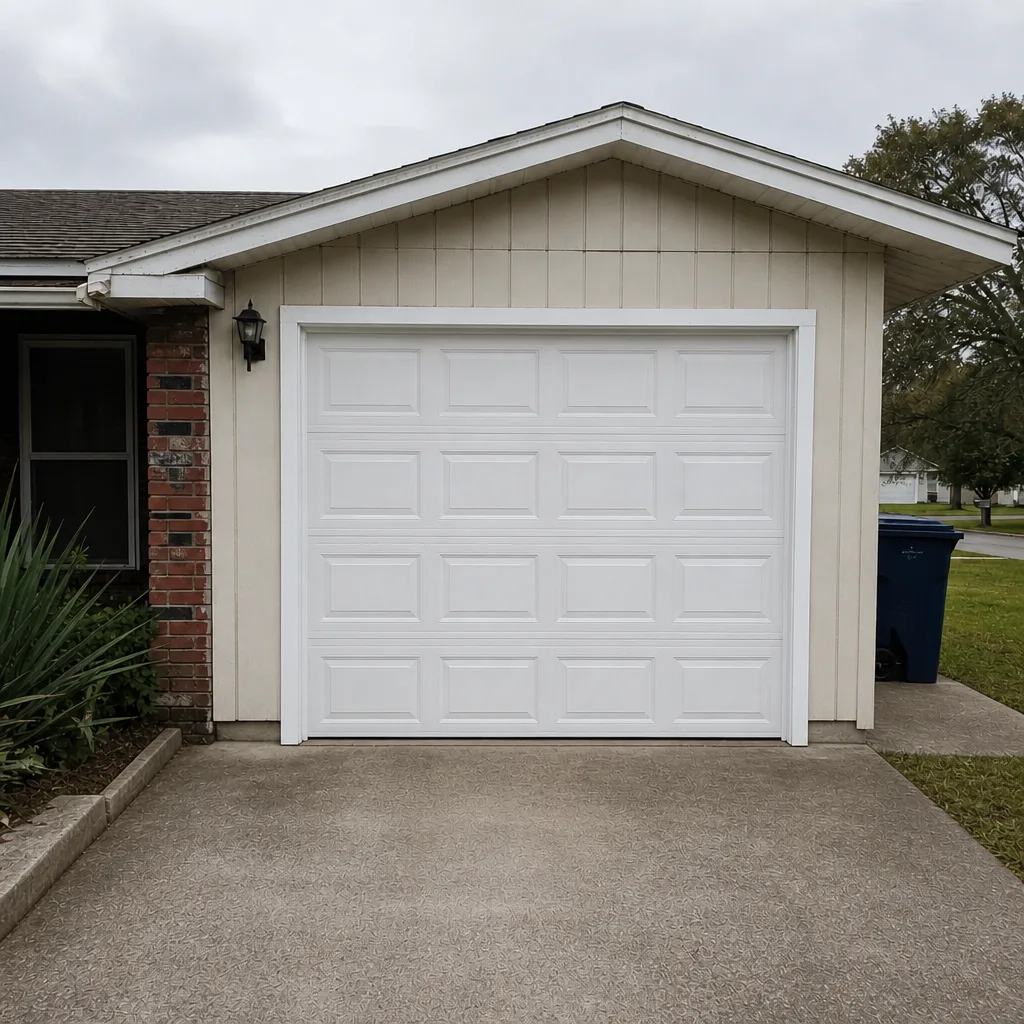 After
Common Mistakes to Avoid
- Assuming a door that opens is a door that’s safe. A door with a bent track or a cracked panel can still operate, and the failure when it comes can be dangerous. Check the door from the inside, not just the street.
- Treating the door like it needs winterizing. Most of the advice online is written for cold climates. In Largo, the tasks that matter most are the pre-hurricane checklist and the post-storm inspection, not de-icing or thawing.
- Ignoring the bottom seal because the door “still keeps most of the rain out.” The bottom seal is the cheapest and most important part of keeping the garage dry. A gapped seal lets water in and lets humidity work on the door’s moving parts over months.
- Trying to adjust a torsion spring yourself. Torsion springs are under enormous tension. You cannot test them safely with a wrench in your hand. This is one of the most common causes of serious injury in garage door work.
- Waiting until after a storm to inspect. Inspect before June 1, not after the first named storm. A door that’s reinforced and aligned in May handles a storm much better than a door that was inspected for the first time in September.
- Replacing one spring when both are the same age. Matched pairs are usually replaced together for a reason. A spring that’s the same age as the one that just broke is on the same clock.
- Using general-purpose oil on the door’s moving parts. General-purpose oil attracts dust, which turns into grit, which wears the rollers and hinges faster. Use a garage-door-rated lubricant.
When to Call a Professional
Some of what’s in this guide you can do yourself: the inspections, the tightening, the lubrication, the seal checks. Some of it you shouldn’t touch, and some of it turns into a professional call the moment an inspection turns up a problem. Call for a pro if any of the following are true:
You found a cracked panel, a bent track, or a broken hinge during the pre-season or post-storm inspection. The door’s balance check showed drift. You heard a loud bang from the garage and the door won’t lift. The opener runs but the door doesn’t move. The door reverses for no reason. The door has come off the track. The spring is visibly broken or looks stretched. You can see daylight through the bottom seal with the door closed. Or you’ve simply reached the point where you’d rather have someone who knows the brand you own look at it before the next storm.
Largo Garage Door Repair Pros offers free estimates in Largo, and we work on the system you actually have, whether that’s a Clopay steel door with a Genie opener or a Wayne Dalton with a Chamberlain drive. Call (855) 774-7112. We answer 24/7. Fast dispatch from 7am to 7pm, Sunday through Friday. If it can’t wait, we treat emergency service as a genuine part of what we do, not an upsell.
Frequently Asked Questions
The single most important task is the pre-hurricane-season inspection before June 1. It’s the one task where a few hours in April or May prevents a much larger problem in September. If you only do one thing this year, do that checklist from the top of this guide.
Do the balance check: disconnect the opener, lift the door to about waist height, and let go. If it stays where you put it, tension is roughly right. If it drifts down, even a little, the spring is losing tension and should be inspected by a pro. Never try to adjust or replace a spring yourself; torsion springs are under enormous tension and can cause serious injury if they release unexpectedly. Call (855) 774-7112 for an exact quote on a spring repair; estimates are free.
Yes. A garage door is one of the largest openings in the structure of a home, and it’s one of the most commonly overlooked during storm prep. A door that’s properly aligned, with hinges tight and tracks straight, handles wind load much better than a door that’s been neglected. Post-storm inspection matters just as much, because wind damage often isn’t visible from the driveway.
Inspect it every dry season and replace it when it stops springing back or shows visible gaps. The dry season is the best time to check, because rubber and vinyl seals shrink slightly in low humidity, which is when gaps are easiest to spot. A worn bottom seal lets in water during the rainy season and lets humidity work on your hinges and rollers year-round.
No. The price is quoted and agreed before any work starts, and the written estimate is what you pay. We walk through what we find, you approve the work, and the price on the estimate is the final price. Call now for an exact quote; estimates are free.
We’re closed on Saturday. Call and we’ll book you into the next opening, Sunday. Springs, openers, panels, tracks, seals: we handle the whole system, and emergency service is a core part of what we do, not an afterthought. If your door won’t close, won’t open, or came off the track, don’t force it; call and we’ll get it scheduled.
The Bottom Line
Largo has two garage door seasons, not four. The dry season (roughly November through May) is for lubrication, balance checks, seals, and hardware. The rainy season (roughly June through November) is for humidity control, spring tension monitoring, and post-storm inspection. The date that matters most is June 1, the start of hurricane season, and the task that matters most is the pre-season inspection before that date. Everything else is a monthly look and a quick call when something turns up. If you’re not sure where to start, we can help. Call (855) 774-7112 for a free estimate. We answer 24/7. Fast dispatch from 7am to 7pm, Sunday through Friday.
For the full range of what we handle in the area around Largo, see garage door repair, garage door opener repair, and garage door spring repair. You can also start at Largo Garage Door Repair Pros for an overview of the full service lineup.
Written by the team at Largo Garage Door Repair Pros.